
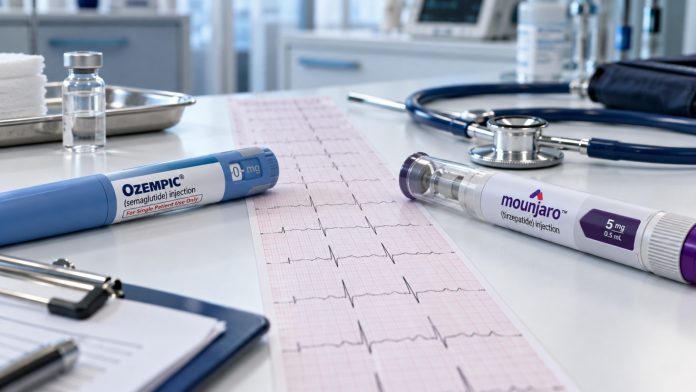
The GLP-1 conversation is obsessed with pounds. That made sense when the category was still proving it could produce weight loss once associated only with bariatric surgery. But as multiple drugs become highly effective at moving the scale, a more important question is moving toward the center of the fight: what happens to heart attacks, strokes and cardiovascular death?
The Cardiovascular Argument Is Getting Louder
Novo Nordisk presented new real-world evidence at the European Association for the Study of Diabetes meeting in Milan involving 636,525 adults with type 2 diabetes.
According to Reuters, patients who escalated Ozempic from 1 mg to 2 mg had a statistically significant 6% lower risk of major adverse cardiovascular events compared with patients who switched from Ozempic to Lilly’s Mounjaro. Novo is understandably promoting the finding. Lilly will understandably scrutinize it.
More than half a million patients is a powerful dataset. It is still not a randomized trial.
Can 636,525 Patients Settle the Debate?
The size of the dataset is impressive, but size does not magically turn observational research into a randomized trial. Real-world studies can capture what happens across enormous patient populations that would be impractical to enroll in conventional trials, yet treatment choices are not random.
People who remain on one drug can differ from people who switch drugs in ways that statistical adjustment cannot completely erase. Prescribing patterns, disease severity, insurance coverage, prior response and physician preference can all introduce confounding.

Real-World Evidence Answers a Different Question
That does not make the study unimportant. It means it answers a different kind of question. Randomized cardiovascular-outcomes trials remain the strongest way to establish causal treatment effects.
Real-world evidence can test whether those benefits appear to persist in routine practice and can generate comparative signals that deserve further study. When a database contains more than half a million patients, even modest relative differences can become clinically and commercially meaningful if they prove robust.
The 6% figure is a signal worth watching — not a final verdict.
The Heart May Matter More Than the Scale
The broader shift is worth noticing. Obesity drugs are no longer competing solely on maximum percentage weight loss.
The next scorecard includes cardiovascular outcomes, kidney outcomes, sleep apnea, liver disease, tolerability, muscle preservation, maintenance strategies, dosing frequency and price. A drug that loses the weight-loss beauty contest by a few points could still become the better choice for a particular patient if it wins somewhere that matters more.

Interest and Skepticism at the Same Time
So the 6% figure should neither be dismissed nor treated as a final verdict. It is a signal from a very large observational dataset, presented by the manufacturer of one of the drugs being compared.
That combination calls for interest and skepticism at the same time — which, inconveniently, is how good science usually works.


