
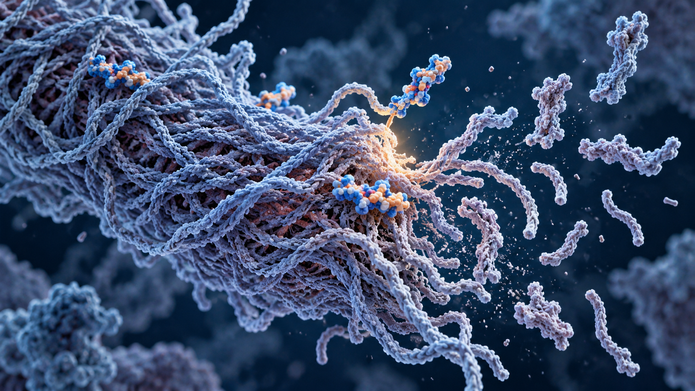
Most drug stories are about blocking something, activating something or replacing something.
PRI-101 is chasing a stranger idea: detangling something.
A Peptide Designed to Disassemble Parkinson’s Protein Aggregates
The experimental all-D-peptide from Priavoid is being developed against alpha-synuclein aggregates, abnormal protein assemblies strongly associated with Parkinson’s disease and related synucleinopathies. Priavoid presented new preclinical findings at the International Congress of Parkinson’s Disease and Movement Disorders in Seoul on October 5, 2026, putting a molecule that has largely lived in specialist neurodegeneration circles directly into the peptide conversation.
The concept is almost suspiciously intuitive. If toxic protein aggregates are part of the disease process, what if a molecule could bind to alpha-synuclein and help disassemble those aggregates rather than merely treating downstream symptoms?
That is the ambition. It is not yet a clinical result.
What the Preclinical Experiments Actually Found
Priavoid reported earlier this year that PRI-101 inhibited alpha-synuclein aggregation and disassembled preformed fibrils in laboratory models. The company says the orally available investigational candidate demonstrated blood-brain barrier penetration in preclinical pharmacokinetic studies and reduced pathological alpha-synuclein signals across organoid and animal models.
The 2026 Movement Disorders Congress abstract describes PRI-101 as binding alpha-synuclein monomers with low-nanomolar affinity, stabilizing their intrinsically disordered conformation and disassembling preformed fibrils back toward monomers. Laboratory experiments also found that PRI-101 reduced the ability of preformed fibrils to seed further aggregation.
In human stem-cell-derived brain organoids, the peptide reduced alpha-synuclein aggregation in a concentration-dependent manner. In mouse models, researchers reported reduced pathological alpha-synuclein accumulation, including in the substantia nigra, and prolonged median survival in one experimental model. These findings support further investigation of the proposed mechanism, but they do not demonstrate clinical benefit in humans.
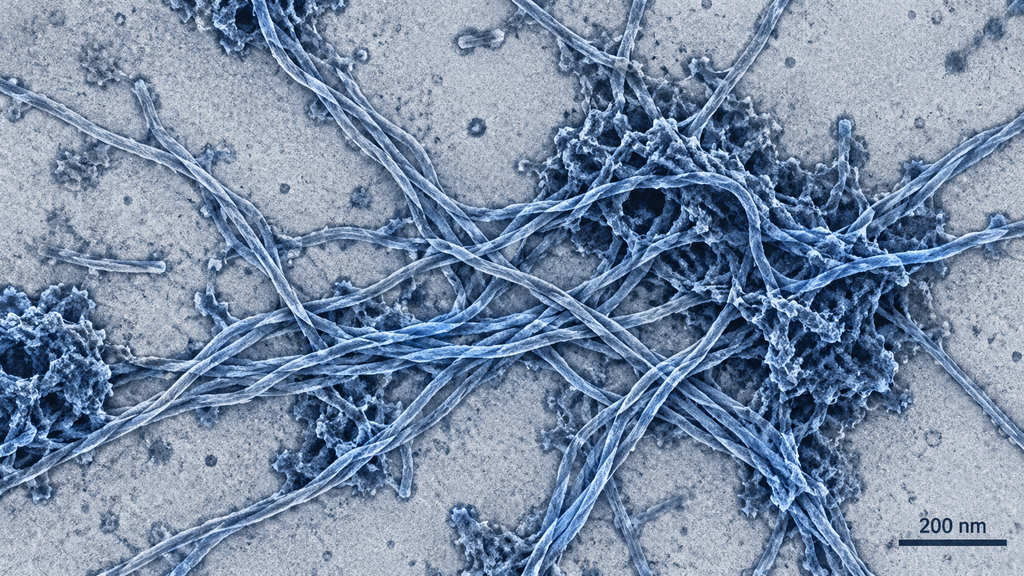
Promising Biology Is Not Yet a Parkinson’s Treatment
Those are provocative findings. They are also preclinical findings, and Parkinson’s research is littered with elegant mechanisms that never became useful medicines.
The reason PRI-101 belongs on the radar is not that anyone should assume it works in patients. It is that peptide engineering is increasingly being used against targets that conventional drug design has struggled to reach. An orally available all-D-peptide aimed at pathological protein aggregation in the brain is a very different proposition from the familiar wellness-market peptide story.
There is an important qualification to the oral-availability claim. PRI-101 has demonstrated activity following oral administration in preclinical models, but its oral bioavailability, brain penetration and therapeutic effects have not yet been established in human clinical trials. Priavoid currently lists PRI-101 as a preclinical program.
The Hardest Test Is Still Ahead
Priavoid still has to move PRI-101 into clinical testing and then demonstrate that changing alpha-synuclein biology actually changes what happens to people with Parkinson’s disease.
That is an enormous distance.
But it is also the kind of distance serious peptide science is now trying to travel.