

The obesity pipeline is often treated as a race to the largest weight-loss percentage. Zealand Pharma is asking a somewhat different question with petrelintide, an investigational amylin analog: can another hormonal pathway provide meaningful weight reduction and glycemic improvement with a tolerability profile that gives clinicians additional choices? On October 7, 2026, the company announced Phase 2 ZUPREME-2 results in adults with overweight or obesity and type 2 diabetes. Those results are not new today, but they offer a useful contrast to headlines about more potent multi-receptor incretin drugs.
A Different Question in the Obesity-Drug Race
Weight reduction matters, but so do tolerability, glycemic control and whether people can continue a treatment over time. Petrelintide is being developed as an alternative hormonal approach rather than simply another GLP-1 receptor agonist. That gives its clinical program a different set of questions to answer: not just how much weight participants lose, but how treatment feels, how safely it can be continued and which patients might benefit most.
What ZUPREME-2 Actually Showed
The randomized, double-blind, placebo-controlled Phase 2b study enrolled 220 adults with overweight or obesity and type 2 diabetes who were taking metformin, with or without an SGLT2 inhibitor. Three once-weekly petrelintide dose groups were compared with placebo alongside a reduced-calorie diet and increased physical activity. Dose escalation occurred every fourth week, with treatment continuing through week 28.
Zealand reported average body-weight reductions of 7.4% to 9.2% across the active-dose groups, compared with 2.0% for placebo, using the efficacy estimand. The 9.2% figure represents the best-performing treatment arm, not an average across all petrelintide recipients. All three active groups met the study’s primary weight-loss endpoint versus placebo, according to the company.
Participants also showed improvements in blood-sugar control. Zealand reported an A1C reduction of up to 0.65 percentage points, compared with an increase of 0.23 points on placebo; placebo-adjusted A1C reductions ranged from 0.61 to 0.88 percentage points across treatment groups. These are promising findings in a diabetes population, but the full ZUPREME-2 results had not yet been presented publicly in detail as of the October 7 announcement.
Why the Amylin Pathway Is Interesting
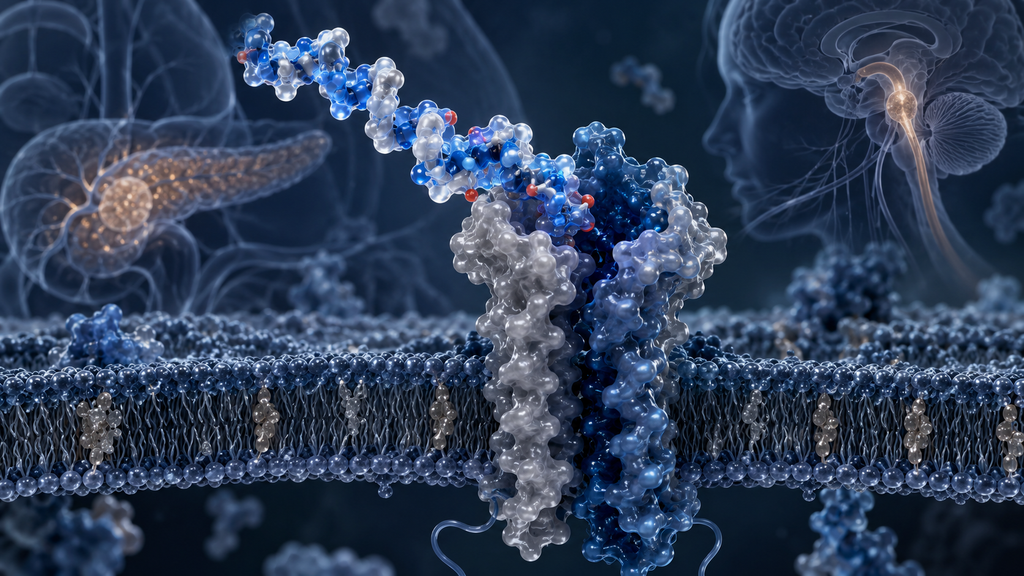
Amylin is a hormone secreted alongside insulin by pancreatic beta cells. It contributes to meal-related satiety and gastric-emptying regulation. Petrelintide is designed to mimic that signaling through a long-acting peptide that can be administered weekly. Its biology differs from activating GLP-1 alone, even though both approaches can affect appetite and body weight.
That distinction matters because obesity medicine is unlikely to be one-size-fits-all. Different pathways may eventually produce different balances of weight reduction, glucose effects, tolerability and treatment adherence. Petrelintide is also being developed in a program involving Roche, which creates opportunities to study both standalone treatment and combinations. None of that establishes that it works better than an approved alternative.
The Tolerability Signal Needs Careful Reading
The company reported discontinuation due to gastrointestinal adverse events in 1.9% of petrelintide-treated participants and 1.7% of placebo participants. That is an encouraging early signal. It is not the same as saying only 1.9% experienced gastrointestinal side effects: Zealand said those events were the most frequently reported adverse events, usually mild and concentrated during dose escalation.
Nor does a low discontinuation rate establish better tolerability than another obesity drug. Comparisons across separate trials can be misleading because patient characteristics, titration schedules, doses, follow-up periods and reporting practices differ. To claim that petrelintide is easier to remain on than a specific competitor, researchers would need an appropriate direct comparative study.
The strongest obesity medicine for a particular patient may not be the one with the largest average weight-loss percentage.
Phase 3 Is Already Underway. The Hard Questions Remain.
The ZUPREME-2 participants had a mean starting body-mass index of 36.3 and a mean A1C of 8.0%. Outcomes in people with type 2 diabetes cannot be automatically transferred to people without diabetes, and 28 weeks cannot answer all the questions raised by chronic treatment. Longer follow-up must assess the durability of weight change, treatment continuation, body composition and uncommon adverse events.
Zealand Pharma and Roche initiated the Phase 3a ZUPREME program in September 2026. The program includes ZUPREME-3, ZUPREME-4 and ZUPREME-5, with approximately 7,000 participants planned across studies of people with and without type 2 diabetes and those with established cardiovascular disease. That next-stage program is already testing whether the earlier findings hold in much larger populations.
There is a commercial reason to watch the results. If several effective obesity therapies become available, convenience, patient fit and persistence may matter alongside peak efficacy. A medicine with less average weight loss could still be valuable for some patients if its overall benefit-risk profile is preferable. That is a reasonable hypothesis, not a conclusion established by ZUPREME-2.
Zealand’s description of petrelintide as a potential future first-choice therapy expresses an ambition, not an established treatment recommendation. Petrelintide remains investigational, and the company-reported topline findings require full analysis and longer-term confirmation.
The October 7 results widen the obesity-drug conversation beyond the biggest headline number. For now, petrelintide’s promise lies in its different biology and an early efficacy-and-tolerability signal. Whether that difference becomes meaningful for patients is a question for larger trials—not a marketing slogan.
Sources: Zealand Pharma, October 7, 2026 — ZUPREME-2 topline announcement; ClinicalTrials.gov — ZUPREME-2 (NCT06926842); Zealand Pharma, September 22, 2026 — Phase 3 ZUPREME initiation.


