
An insulin molecule is too small to see with an ordinary microscope, yet its three-dimensional shape helps determine how it behaves.
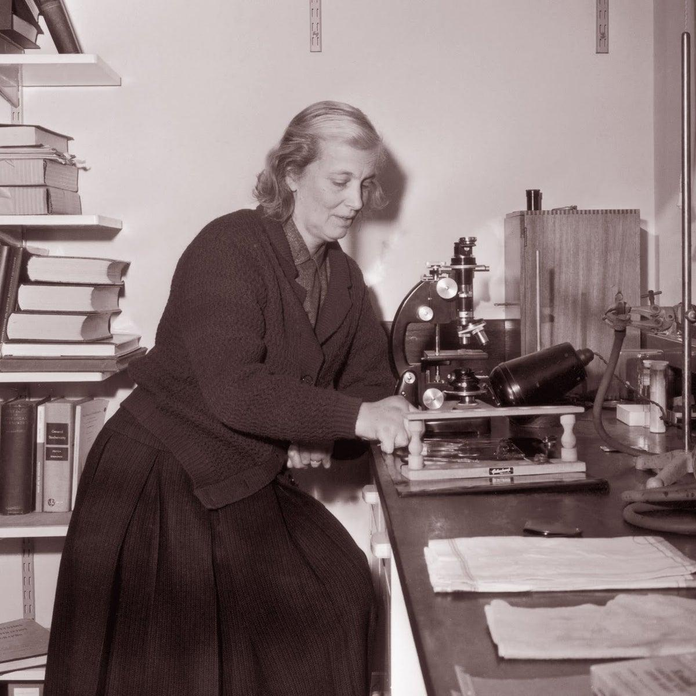
Dorothy Crowfoot Hodgkin devoted a major part of her scientific life to making structures like this visible through X-ray crystallography.
Her documented work on penicillin, vitamin B12 and insulin helped transform structural chemistry, and she received the 1964 Nobel Prize in Chemistry for determining important biochemical structures.
This is a historical profile, not a report of a new discovery. Its modern relevance is that every peptide and protein therapy depends on molecular shape as well as chemical composition.
How X-Ray Crystallography Made Invisible Molecules Understandable
Hodgkin trained in an era when scientists could identify a substance’s biological importance without knowing exactly how its atoms were arranged.
X-ray crystallography offered a way forward.
Carefully prepared crystals scatter X-rays into patterns from which researchers can infer molecular structure. The technique does not simply photograph individual molecules. Scientists analyze diffraction measurements mathematically to reconstruct electron density and develop three-dimensional structural models.
The method demands experimental precision, careful sample preparation and sophisticated interpretation. Complex biological molecules posed particularly difficult problems because of their size and intricate organization.
Hodgkin’s career shows how long-term technical persistence can turn a chemical mystery into a structural model.
Working with J. D. Bernal at Cambridge and later conducting research at Oxford, she helped extend crystallographic methods toward increasingly complex molecules.
The Nobel Prize Came Before the Insulin Breakthrough
Her work was not confined to insulin.
Determining the structures of penicillin and vitamin B12 represented major achievements in their own right. These investigations demonstrated the growing power of crystallography to resolve chemically and biologically important substances.
In 1964, Hodgkin received the Nobel Prize in Chemistry for her determinations by X-ray techniques of the structures of important biochemical substances.
But one of her most ambitious projects was still unfinished.
Hodgkin had obtained X-ray diffraction photographs of insulin crystals in 1935. The protein’s complete three-dimensional structure remained beyond the practical capabilities of the methods available at the time.
It was not until 1969 that Hodgkin and her research team reported the structure of zinc-containing insulin crystals.
That timeline is crucial. It would be inaccurate to say she received the 1964 Nobel Prize for a completed insulin structure. The prize recognized an already remarkable body of structural work, with insulin becoming a later landmark.
Why Insulin Took More Than Three Decades to Solve
Why did insulin present such an extraordinary challenge?
Compared with many smaller organic molecules, insulin has a substantially more complicated architecture. It contains 51 amino-acid residues organized into two peptide chains, known as the A chain and B chain.
These chains are connected through two disulfide bonds, while a third disulfide bond occurs within the A chain. The resulting molecular arrangement is important to the hormone’s structure and function.
Obtaining suitable insulin crystals, interpreting diffraction patterns and refining a detailed atomic model required years of improvements in experimental methods, mathematical techniques and computing.
Hodgkin and her colleagues eventually established the three-dimensional arrangement of insulin in its studied crystalline form, providing a much clearer understanding of the hormone’s molecular organization.
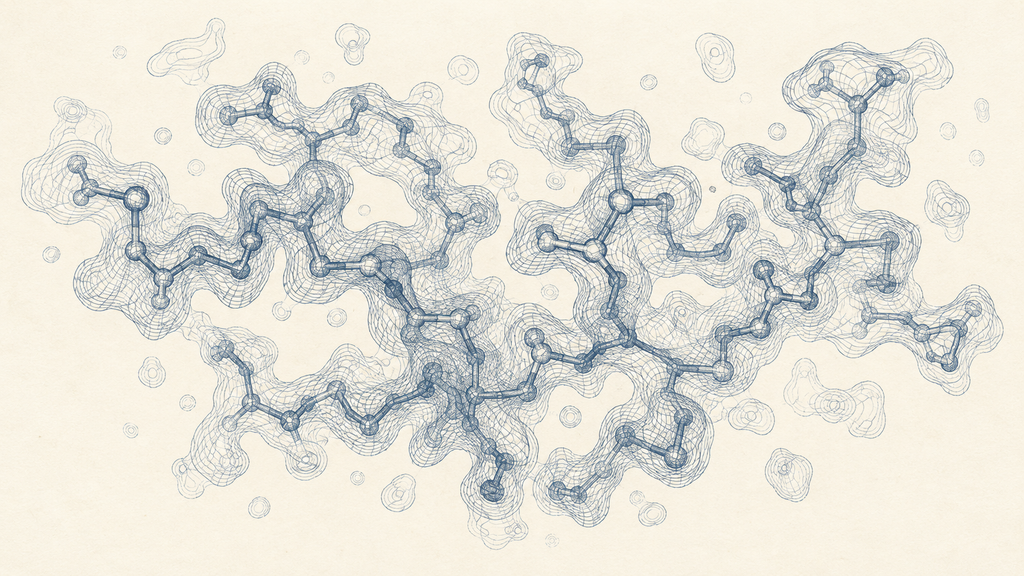
Amino-acid sequence and molecular structure answer different questions.
The sequence identifies which amino acids make up a protein and their order. A three-dimensional structure reveals how the atoms are arranged in space and how different parts of the molecule relate to one another.
Knowing what a hormone is made of is not the same as understanding how its molecular architecture supports its function.
A Scientific Legacy Built on Persistence and Collaboration
Hodgkin’s path also matters because of the scientific culture she navigated.
She pursued structural chemistry during a period when women faced substantial barriers to academic recognition and professional advancement.
In 1964, she became the third woman to receive the Nobel Prize in Chemistry, following Marie Curie and Irène Joliot-Curie.
The Science History Institute documents her academic work at Oxford and Cambridge, her collaboration with J. D. Bernal and her important role mentoring researchers, including many women.
Her scientific legacy includes both discoveries and the training of people who carried structural methods into new problems.
The insulin breakthrough was also the result of cumulative work. Hodgkin’s team benefited from improvements in X-ray instrumentation, computational analysis and the contributions of numerous collaborators.
The history should not be reduced to a single dramatic experiment. Progress occurred through repeated measurements, technical obstacles and years of refinement.
Why Modern Peptide Science Still Depends on Molecular Shape
Modern drug discovery owes a great deal to the structural mindset Hodgkin helped establish.
Researchers now routinely use crystallography, cryo-electron microscopy and computational modeling to investigate how hormones, receptors and therapeutic candidates interact.
Understanding molecular structure can help researchers develop hypotheses about receptor binding, stability, chemical modifications and biological function.
But a molecular model cannot replace pharmacology or clinical testing.
Knowing the structure of a peptide does not tell a clinician whether a particular formulation is safe, effective or appropriate for a patient. Those questions require separate evidence.
Insulin’s structural history also challenges the idea that scientific progress is always sudden.
A molecule can be central to medicine for years before its full architecture is understood. Breakthroughs often require improvements in instruments, sample preparation, mathematics and collaboration rather than one spectacular moment.
Hodgkin’s career is a story of patient, cumulative scientific work, with discoveries separated by long stretches of technical effort.
Today’s peptide industry celebrates speed, scale and novel sequences. Hodgkin’s example points to a complementary virtue: look closely enough to know what you have made.
Her work helped move molecular biology from naming important substances toward understanding their architecture.
Biological activity begins with chemistry, but understanding that chemistry in three dimensions can reveal possibilities that a flat sequence alone cannot.