
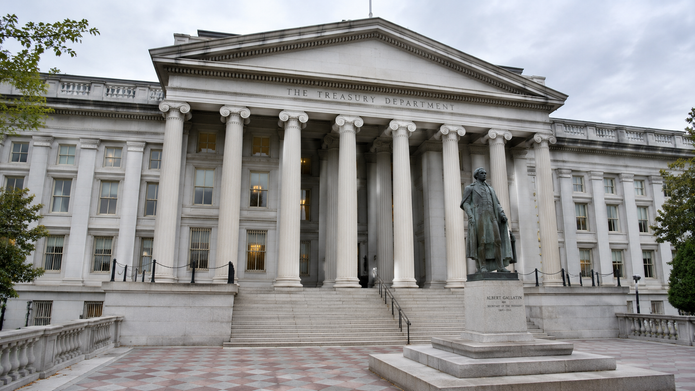
A biotechnology deal can be a scientific collaboration, a financial investment, an access point to manufacturing expertise and, increasingly, a national-security question. The U.S. Treasury Department moved that last category closer to the center of biotech dealmaking on October 22, when it proposed changes to the Outbound Investment Security Program that would add biotechnology to a framework already built around strategically sensitive technologies.
The development is not a blanket prohibition on American investment in foreign drug companies. It is a proposed expansion of a targeted program, and the distinction matters.
Why Treasury Wants Biotechnology Under Investment Controls
The proposed rule responds to the Comprehensive Outbound Investment National Security Act, known as the COINS Act, enacted on December 18, 2025. Treasury says the framework is intended to address transactions that could contribute to military, surveillance, intelligence or cyber-enabled capabilities of countries of concern.
The original program centered on semiconductors, quantum technologies and artificial intelligence. The new proposal would bring defined biotechnology activities into the conversation alongside other strategic sectors.
That shift has consequences for an industry built on international licensing, venture funding and scientific partnerships. A promising compound can originate in one country, be financed in another, undergo manufacturing development somewhere else and enter clinical testing across several jurisdictions.
Capital does not merely provide cash. Investors may bring management expertise, technical assistance, commercial introductions and access to markets. Treasury’s concern is precisely that some of those benefits can strengthen capabilities considered sensitive for national security.
Which Biotechnology Activities Could Face Restrictions?
The proposal would bring specified biotechnology activities into the prohibited-technology category. Unlike some other sectors covered by the framework, biotechnology does not have a separate notification tier under the current proposal.
The draft includes certain activities involving biological systems used to produce or modify pharmaceutical compounds, along with areas such as biological sequencing, biomanufacturing equipment, bioinformatics and automated scientific discovery technologies.
Some of those definitions could have substantial implications for pharmaceutical research and development. Treasury is seeking public feedback on whether activities involving pharmaceutical compounds should be more narrowly defined, including whether restrictions should focus on advanced or frontier technologies.
Yet a policy headline can outrun its actual scope. The proposed rule describes categories of covered transactions, definitions, exceptions, technical parameters and compliance requirements. It is not a finding that all biotechnology is dangerous or that every U.S.-China pharmaceutical transaction is prohibited.
Nor is a proposal equivalent to a final rule. Treasury has invited comments through December 7, 2026. The eventual requirements may differ from what is now on the table.
Why Peptide and Pharmaceutical Companies Should Pay Attention
Peptide drug developers have a particular reason to pay attention without panicking. The sector often depends on a global ecosystem of chemistry expertise, contract research, raw materials and manufacturing capabilities.
A licensing agreement, purchase of services or ordinary product shipment is not automatically the same thing as a covered investment in a foreign entity. Transaction structure, technology, counterparties and the exact regulatory definitions will matter.
There is, however, an important complication. Certain joint ventures may fall within the proposed framework even when they do not involve conventional equity ownership. A commercial arrangement that shares assets, technical capabilities and economic benefits may require closer legal examination than a routine supplier contract.
Businesses that collapse all these categories into one political slogan risk making costly decisions based on the wrong rule.
The Potential Impact on Global Biotech Investment
The proposal could reshape the economics of early-stage innovation. Companies with cross-border funding strategies may have to evaluate whether a prospective transaction is prohibited, notifiable under another covered technology category, or eligible for an exception.
Diligence may become more demanding, and legal advice more specialized. Some transactions may move toward alternative financing structures or different partners.
But these are potential consequences, not demonstrated effects. The proposal itself provides no measured forecast of lost deals, redirected capital or changes in peptide prices.
The larger story is that biotechnology is no longer being treated exclusively as a healthcare industry. Governments increasingly see biological tools as part of a broader strategic technology landscape.
That framing can encourage domestic investment and security screening while also raising questions about scientific openness, competition and access to innovation. Those tensions will not be resolved by a single notice of proposed rulemaking.
What Happens Before the Rule Becomes Final?
For now, the most important words are proposed and defined.
The proposal was announced on October 22, 2026, and published in the Federal Register on October 26. Public comments are due December 7, 2026. Treasury will consider feedback before issuing final regulations and announcing an effective date.
The existing outbound investment rules remain in effect in the meantime. The biotechnology expansion should not be reported as though it has already entered into force.
Watch the public comments, the final technology definitions, the exceptions and the effective date that Treasury eventually announces. A genuinely consequential rule could alter how some biotech partnerships are financed.
Claiming that it already has done so would be premature.