
For generations, biology textbooks introduced mitochondria as the cell’s power plants. The metaphor was useful, but it concealed a more complicated reality.
Mitochondria have their own DNA, and some of its genetic information can encode small proteins and peptides with biological signaling functions.
Pinchas Cohen helped bring that possibility from a specialized scientific question into a broader research program connecting cellular metabolism, aging and disease.
His work, alongside that of many collaborators, contributed to the emergence of mitochondrial-derived peptides as a field of research. Molecules including humanin, MOTS-c and small humanin-like peptides have challenged assumptions about what the mitochondrial genome can produce.
The discovery of a naturally occurring peptide does not make it an established medicine. But the research has changed how scientists investigate genetic information that traditional approaches may have overlooked.
From Clinical Medicine to Mitochondrial Biology
Pinchas Cohen’s scientific career spans endocrinology, aging biology, diabetes and neurodegenerative disease.
According to his institutional biography at the University of Southern California, Cohen earned his medical degree at the Technion in Israel and completed clinical and research training at Stanford University.
He subsequently held faculty positions at the University of Pennsylvania and UCLA, where his research examined endocrine systems, metabolism and diseases associated with aging.
In 2012, he became dean of the USC Leonard Davis School of Gerontology, an institution focused on understanding the biological, medical and social dimensions of aging.
His laboratory’s research increasingly focused on a question that extended beyond traditional endocrinology: could mitochondria communicate with the rest of the cell and the body through previously unrecognized small proteins?
Mitochondria were already known for their central role in energy production, but their functions are not limited to making adenosine triphosphate, or ATP.
They also participate in metabolic regulation, cellular stress responses and communication between different biological systems.
Cohen and his collaborators helped establish mitochondrial-derived peptides as candidates for understanding some of those signaling processes.
The importance of this work was not simply the identification of new molecules. It was the recognition that short genetic sequences could contain biological instructions worth investigating.
How Mitochondrial DNA Became a Source of Hidden Peptides
Human cells contain most of their genetic information in the nucleus. Mitochondria, however, possess their own much smaller genome.
The human mitochondrial genome has traditionally been described in terms of its established protein-coding genes, transfer RNAs and ribosomal RNAs.
Researchers eventually began examining whether short open reading frames within mitochondrial sequences might encode additional functional peptides.
An open reading frame is a genetic sequence with the potential to be translated into a peptide or protein.
Short open reading frames were historically easier to overlook because conventional gene annotation often focused on larger protein-coding sequences.
Humanin became an important early example of why that approach could miss biologically meaningful information.
The peptide was first described in 2001 by Yuichi Hashimoto and colleagues, working with Ikuo Nishimoto, through experiments investigating protection against neuronal cell death associated with Alzheimer’s disease-related mechanisms.
Subsequent research by other groups, including work involving Cohen, expanded understanding of humanin’s biological activities and its relationship to mitochondrial genetic information.
Humanin is a small peptide associated with the mitochondrial 16S ribosomal RNA region. Researchers have investigated its potential roles in cellular survival, metabolism and responses to biological stress.
The discovery helped establish a broader scientific possibility: mitochondrial DNA could contain short sequences capable of producing biologically active peptides beyond the conventionally recognized mitochondrial proteins.
This new direction did not overturn the established role of mitochondria in cellular energy production.
Instead, it added another layer to their biology: mitochondria could potentially influence cellular function through signaling molecules encoded within their own genetic material.
Humanin, MOTS-c and the Expansion of the Field
One of the major milestones associated with Cohen’s research came in March 2015.
In a study published in Cell Metabolism, Changhan Lee, Pinchas Cohen and their collaborators described MOTS-c, a 16-amino-acid peptide encoded by a short open reading frame within the mitochondrial 12S ribosomal RNA region.
The study investigated how MOTS-c influenced metabolic regulation and insulin sensitivity.
In experimental models, the researchers observed effects involving metabolic pathways connected to cellular energy balance, including signaling through AMP-activated protein kinase, commonly called AMPK.
Mouse experiments reported that MOTS-c treatment protected against certain forms of age-related and diet-induced insulin resistance and diet-induced obesity.
Those findings helped position mitochondrial-derived peptides as potential participants in metabolic communication rather than merely products of previously overlooked genetic sequences.
However, the results were not proof that MOTS-c could treat obesity, diabetes or aging-related conditions in humans.
Animal metabolism, peptide exposure and treatment responses can differ substantially from human biology.
The next major expansion came through research into small humanin-like peptides, or SHLPs.
In April 2016, USC reported that Cohen’s team had identified six additional peptides, named SHLP1 through SHLP6, encoded within the mitochondrial genome.
The researchers studied their distribution in biological tissues and investigated how individual peptides influenced cellular processes.
Different members of the SHLP family demonstrated different experimental properties, including effects associated with cellular stress, metabolism and cell survival.
For researchers, the finding suggested that mitochondrial-derived peptide biology might involve a family of signaling molecules rather than a single unusual discovery.
It also raised more questions about how these peptides are regulated, which tissues produce them, how they interact with other cellular systems and whether particular molecules could eventually support therapeutic development.
From Discovery to Laboratory Experiments
Identifying a possible peptide-coding sequence is only the beginning of a scientific investigation.
Researchers must establish whether the predicted peptide is actually produced in biological systems, determine where it is expressed and investigate whether it performs a measurable function.
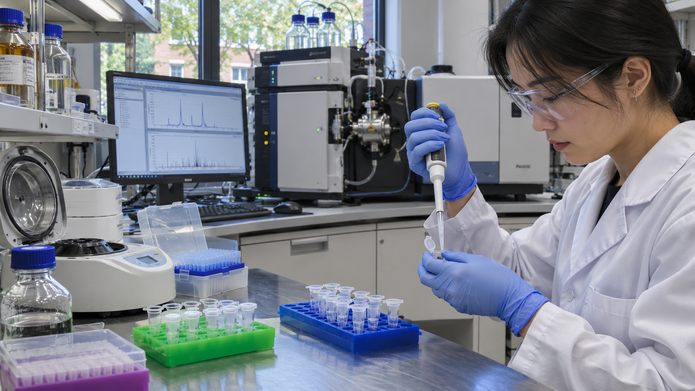
That process can involve computational sequence analysis, mass spectrometry, biochemical assays, cell-culture experiments and animal studies.
Cohen’s laboratory has developed approaches combining mitochondrial genomics, transcriptomics, proteomics and computational methods to identify previously unrecognized microproteins.
The research program also investigates genetic variation and its potential relationship to diseases associated with aging.
These experiments are important because a computational prediction does not automatically establish that a peptide exists or has a meaningful biological function.
A short open reading frame may suggest a possible molecular product, but experimental evidence is needed to demonstrate expression and biological activity.
Similarly, detecting a peptide does not automatically establish that it regulates metabolism, protects neurons or influences disease progression.
Researchers must investigate its function through controlled experiments, characterize potential interactions and determine whether observed effects can be reproduced.
The combination of computational discovery and experimental validation has become a defining part of modern microprotein research.
It allows investigators to explore biological information that older methods may have missed while maintaining the distinction between predicted function and demonstrated activity.
When Mitochondrial Genetic Variants Point Toward Aging and Disease
The wider scientific significance of mitochondrial-derived peptides extends beyond the molecules themselves.
Researchers are also investigating whether genetic variation in mitochondrial sequences affects peptide production, biological signaling and susceptibility to certain diseases.
One example emerged in research involving a mitochondrial microprotein called SHMOOSE.
In a study first published online in September 2022 and subsequently appearing in Molecular Psychiatry in 2023, researchers including Brendan Miller and Pinchas Cohen reported a relationship between a mitochondrial genetic variant and Alzheimer’s disease-associated measures.
The team identified a previously unrecognized mitochondrial short open reading frame with the potential to encode SHMOOSE.
They combined genetic association analyses with biochemical detection and laboratory experiments examining the microprotein’s biological properties.
The researchers also reported relationships involving SHMOOSE levels in cerebrospinal fluid and measures associated with aging and brain biology.
Such findings are scientifically intriguing because they connect mitochondrial genetic variation with questions about cellular signaling and neurological disease.
However, a genetic association does not automatically prove that a particular peptide causes or prevents disease.
The relationship could be influenced by other biological processes, and laboratory experiments cannot establish that administering the peptide will change clinical outcomes in patients.
The findings therefore provide a foundation for further mechanistic and translational research rather than evidence of an established Alzheimer’s treatment.
For Cohen’s broader research program, the importance is methodological as well as biological.
By examining overlooked regions of mitochondrial genetic information, researchers can identify new hypotheses about how cellular metabolism, aging and disease may be connected.
Why Scientific Discovery Is Not the Same as an Anti-Aging Drug
The commercial interest in mitochondrial-derived peptides is understandable.
Molecules involved in metabolic regulation, cellular survival and stress responses could eventually provide starting points for treatments directed at specific biological pathways.
Cohen’s institutional biography documents patents involving novel peptides and his role as a cofounder of CohBar, a biotechnology company associated with mitochondrial-derived peptide development.
Such activities illustrate how discoveries in basic biology can create opportunities for pharmaceutical research.
But commercialization and clinical validation are different stages of development.
A patent establishes a form of intellectual-property protection, not clinical effectiveness. A company’s interest in a molecule does not demonstrate that it is safe or useful as a treatment.
Even an encouraging result in a cell culture or animal model may fail to translate into benefits for human patients.
Researchers developing mitochondrial-derived peptides as potential medicines must investigate formulation, absorption, distribution, metabolism, toxicity and interactions with other biological systems.
Clinical studies must then determine whether a candidate produces benefits that justify its risks in an appropriately defined patient population.
This distinction is especially important for molecules such as MOTS-c, whose names have become increasingly familiar in commercial peptide discussions.
The fact that a peptide occurs naturally in the body does not establish the safety of manufactured injectable versions or validate dosing protocols circulated outside controlled medical research.
Similarly, experimental evidence concerning metabolism or cellular protection should not be converted into unsupported claims about longevity, weight loss or prevention of age-related disease.
The lasting significance of Cohen’s work is not that mitochondrial-derived peptides have already fulfilled every proposed therapeutic application.
It is that his research and collaborations helped establish a new framework for investigating the mitochondrial genome and its potential signaling functions.
By helping scientists recognize that very small genetic products can have meaningful biological effects, this work expanded the range of molecules considered relevant to metabolism, aging and disease.
Whether particular mitochondrial-derived peptides eventually become approved medicines will depend on the quality of the experimental and clinical evidence.
For now, the scientific contribution is substantial on its own.
The mitochondrion remains central to cellular energy production, but research into mitochondrial-derived peptides has revealed another dimension of its biology: a source of molecular signals that scientists are still learning to identify, measure and understand.
Sources and Further Reading
-
USC Leonard Davis School of Gerontology: Pinchas Cohen Faculty Biography
-
USC Neuroscience Graduate Program: Cohen Laboratory Research Summary, June 12, 2025
-
Hashimoto and Colleagues: Original Humanin Discovery, Proceedings of the National Academy of Sciences, 2001
-
Lee, Cohen and Colleagues: MOTS-c and Metabolic Homeostasis, Cell Metabolism, March 2015
-
USC Today: Newly Discovered Proteins May Protect Against Age-Related Illnesses, April 13, 2016
-
Molecular Psychiatry: Mitochondrial DNA Variation and the SHMOOSE Microprotein, First Published September 2022