
There are two ways to read Novo Nordisk’s new Hengrui deal. One is financial: up to $2.6 billion for rights to an early-stage Chinese obesity drug. The other is scientific, and it may be more interesting.
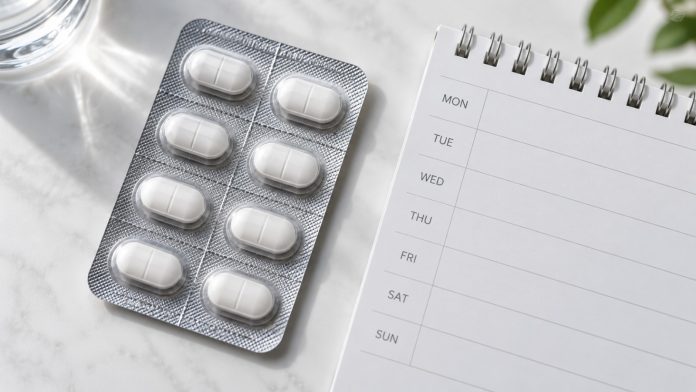
HRS-1596 is being developed as a once-weekly oral dual agonist of the GLP-1 and GIP receptors — essentially an attempt to put a multi-receptor incretin strategy into a pill that patients might take only once every seven days.

The Oral Delivery Challenge
That combination matters because oral delivery remains one of drug development’s stubborn engineering problems. Peptide-based therapies in particular face barriers in the gastrointestinal tract, where large and fragile molecules can be broken down before reaching circulation.
Oral semaglutide proved that the barrier can be partially overcome, but current peptide-based oral approaches often require careful administration and relatively frequent dosing. A genuinely practical weekly oral therapy would be a different proposition.
A once-weekly pill could combine injection-like dosing frequency with the convenience of oral treatment.
A Billion-Dollar Bet Before the Evidence
HRS-1596 is still extremely early. It has authorization for Phase 1 testing in China, and Novo says it intends to advance global development. There is no basis yet for claiming that the molecule will match injectable tirzepatide, oral small-molecule GLP-1 drugs or established semaglutide products.
The $2.6 billion figure is mostly milestone money, not a check written today. Novo’s upfront commitment is $300 million.

Why GLP-1/GIP Matters
Still, the target choice is notable. GLP-1/GIP dual agonism is no longer theoretical; tirzepatide established that engaging both receptors can produce major metabolic effects.
The question is whether HRS-1596 can deliver that biology orally with exposure stable enough to support weekly dosing. If it eventually demonstrates that, its differentiation would not depend only on how much weight people lose. Convenience, adherence, manufacturing economics and patient preference would become part of the efficacy story.
Route of administration is becoming a competitive mechanism in its own right.
Where Obesity Research Is Going Next
The timing also tells us where obesity research is heading. The first generation asked whether GLP-1 drugs could produce meaningful weight loss. The next generation asks how many receptors can be combined, how much lean mass can be preserved, how long dosing intervals can stretch and whether injections can be replaced entirely.
Watchlist, Not Winner’s Circle
For now, HRS-1596 belongs in the watchlist, not the winner’s circle. Phase 1 exists to discover whether attractive ideas survive contact with human pharmacology.
But when Novo is willing to spend hundreds of millions upfront for the opportunity to answer that question, the rest of the industry will be watching the answer very closely.