
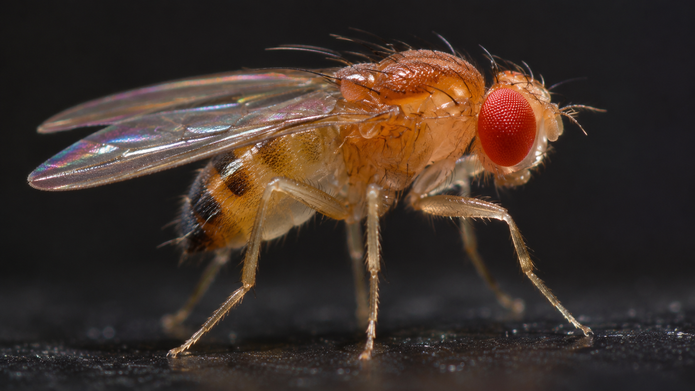
One of the stranger clues in antibiotic research has come from a protein originally associated with sleep. In fruit flies, a protein called Nemuri helps connect the biological drive to sleep with the body’s response to infection. Scientists already knew it had antimicrobial properties. What remained uncertain was how it could attack bacteria.
A study published on October 29, 2026, in Nature Communications offers an unexpected answer. Researchers found that short antimicrobial peptides derived from Nemuri can enter bacterial cells, alter the organization of ribosomes and suppress the production of proteins that bacteria need to survive.
The finding is especially interesting because these peptides showed activity against multiple microorganisms, including antibiotic-resistant bacterial strains. But the discovery is not a newly approved antibiotic. It is a laboratory investigation into a potential antibacterial mechanism that remains far from established clinical use.
The Fruit Fly Protein That Linked Sleep With Fighting Infection
Nemuri’s scientific history began well before the October 2026 paper. In 2019, researchers published a study in Science identifying the protein as an important factor connecting sleep regulation and immune defense in Drosophila melanogaster, the common fruit fly.
That earlier work showed that Nemuri could promote sleep and influence how flies responded to bacterial infection. Experiments involving changes in Nemuri expression linked the protein to altered sleep behavior and, under certain conditions, improved survival after infection.
The finding raised a biological question. Why would a protein associated with sleep also possess antimicrobial activity? Sleep and immune responses are closely connected, but a shared biological role does not automatically explain the molecular machinery involved.
Nemuri offered an unusual opportunity to investigate that relationship. Researchers could study not only what happened when the protein was present but also what its molecular components actually did to microorganisms.
The 2026 study focused on this second question. Rather than establishing a new role for Nemuri in sleep, the investigators examined how shorter peptide fragments derived from the protein produced antibacterial effects.
Three Peptide Fragments Revealed a Different Kind of Antibacterial Activity
Proteins are built from chains of amino acids, and some can be processed into smaller fragments with distinct biological functions. The researchers investigated an arginine- and glycine-rich region of Nemuri that appeared important for its antimicrobial properties.
The team examined three short peptide sequences, named C62, C42 and C20 according to their lengths in amino acids. Their experiments supported biological processing that generates C62 and C42, while C20 was studied as a possible additional fragment whose natural production was not equally established.
When the investigators tested synthesized versions of these peptides, all three inhibited bacterial growth under laboratory conditions. Additional experiments showed that altering specific arginine residues could substantially reduce their activity.
That result mattered because the peptides did not appear to function simply by carrying a positive electrical charge. The chemical identity and arrangement of particular amino acids also contributed to their antibacterial properties.
Many antimicrobial peptides act by damaging bacterial membranes. Nemuri-derived peptides showed a different pattern. Experiments indicated that they could penetrate bacterial cells without causing the overt membrane disruption seen with certain membrane-lytic antimicrobial peptides.
Once inside, the peptides interacted with RNA and components of the ribosomal machinery. That observation directed attention toward an essential cellular process: protein synthesis.
Instead of Destroying Bacterial Membranes, the Peptides Disrupted Ribosome Organization
Ribosomes are molecular machines responsible for translating genetic instructions into proteins. Bacteria depend on them for essential cellular functions, growth and reproduction. Many existing antibiotics interfere with translation by binding to defined sites on bacterial ribosomes.
The Nemuri-derived peptides investigated in the new study behaved differently. Rather than targeting only one narrow binding pocket, they interacted broadly with RNA and ribosomal surfaces through multiple molecular contacts.
Those interactions were associated with changes in the physical organization of ribosome-rich regions inside bacterial cells. The researchers observed that ribosomes became more concentrated in localized assemblies and showed substantially reduced mobility.
In complementary experiments using purified ribosomes, Nemuri-derived peptides could directly promote ribosomal clustering. Measurements of fluorescently labeled components showed reduced recovery of ribosomal signals following photobleaching, supporting the conclusion that ribosomal movement and exchange had become restricted.
The researchers also measured protein production. Their results showed that the peptides substantially inhibited translation, connecting the changes in ribosome organization with a functional effect on bacterial biology.
The mechanism is striking because it points toward a physical vulnerability in bacterial cells. Ribosomes must do more than exist and possess the correct molecular structure. They must also operate within a dynamic cellular environment. Changing that environment may interfere with the processes that keep bacteria alive.
Still, the language requires precision. The experiments did not show that every ribosome became completely immobilized or that the entire bacterial cytoplasm turned into a solid material. The authors described condensation-like remodeling and a selective reduction in ribosomal mobility. They also cautioned against treating the observations as definitive proof of a particular liquid-liquid phase-separation mechanism.
This is not the first research suggesting that positively charged peptides and proteins can perturb ribosomes or RNA-rich cellular structures. The distinctive contribution is demonstrating how a naturally occurring, sleep-associated animal protein can generate peptides that exploit this type of bacterial vulnerability.
The Peptides Inhibited Drug-Resistant Bacteria, but the Evidence Is Still Preclinical
The researchers tested Nemuri-derived peptides against a broad collection of microorganisms. These included Gram-negative and Gram-positive bacteria, mycobacteria and the yeast Candida albicans. Most of the tested microorganisms were susceptible within the experimental concentration ranges reported by the authors.
Importantly, the tested bacterial collection included clinically relevant resistant strains. These included bacteria carrying resistance mechanisms associated with difficult-to-treat infections, such as carbapenem-resistant Klebsiella pneumoniae, resistant Escherichia coli, multidrug-resistant Pseudomonas aeruginosa and vancomycin-resistant enterococci.
Across most tested organisms, the reported minimum inhibitory concentrations ranged from approximately 2 to 32 micromolar. Additional assays suggested that bacterial killing could occur at concentrations close to those needed to inhibit growth.
These are meaningful experimental findings. They indicate that the peptides can act against organisms that present major challenges to conventional antimicrobial treatment. They also justify further investigation of whether this mechanism could be useful in future antibacterial development.
But susceptibility in a laboratory dish is not equivalent to treating an infection in a patient. A peptide that inhibits bacterial growth under controlled conditions must still contend with biological fluids, tissue distribution, immune responses, enzymatic degradation and the practical challenge of reaching a useful concentration at an infection site.
The experiments also do not establish that bacteria cannot evolve resistance to this approach. A broad interaction with RNA and ribosomes may create different resistance pressures from those associated with conventional antibiotics, but whether it provides a durable resistance advantage remains to be investigated.
What Must Happen Before a Fruit Fly Peptide Could Become an Antibiotic
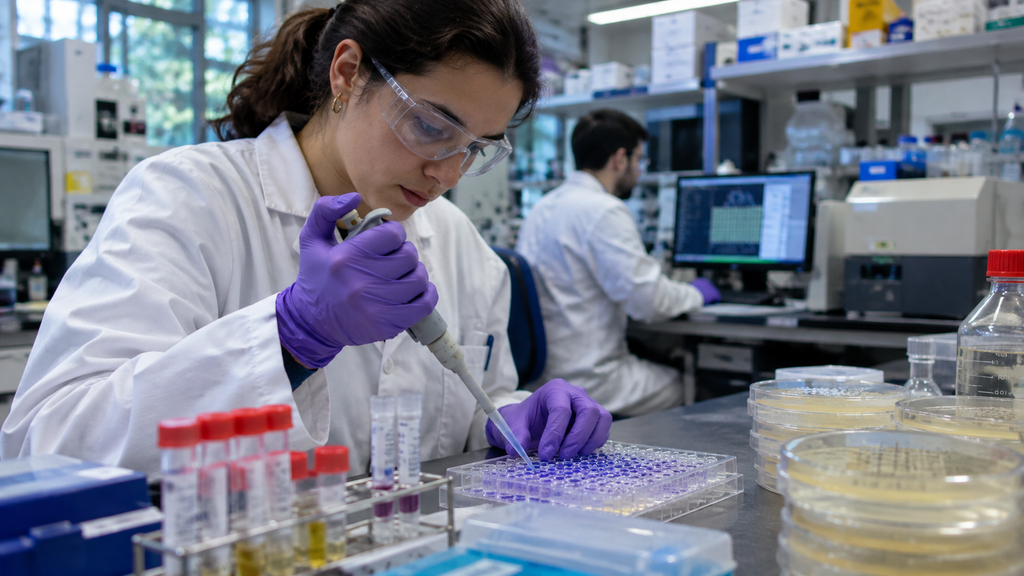
The study also examined toxicity toward selected animal cells. Under the tested conditions, C42 and C20 showed no detectable cytotoxicity in the evaluated fruit fly and mammalian cell lines. C62 generally showed low cytotoxicity, although the investigators observed a modest reduction in viability in one mammalian cell line at the highest tested concentrations.
Those findings are encouraging for early research, but they are not a comprehensive safety evaluation. Laboratory cell-viability tests cannot establish what would happen after repeated exposure in a living organism or determine whether an effective antibacterial concentration could be achieved safely in human tissues.
Further work would need to address peptide stability, distribution, clearance, immune reactions, delivery methods and potential effects on healthy tissues. Researchers would also need to investigate whether repeated exposure encourages bacterial adaptation and whether any improved peptide design maintains useful activity.
The differences among C62, C42 and C20 make this particularly relevant. The most potent fragment is not automatically the best candidate for development. A viable antibacterial medicine must balance microbial activity with tolerability, stability, manufacturing feasibility and the ability to reach its intended target.
There is a second scientific question that remains open. Nemuri was originally identified because of its connection to sleep and immune defense, but the new ribosome findings do not establish that its sleep-promoting effects operate through the same mechanism. The authors discuss possible connections involving neuronal RNA-protein organization, while recognizing that those ideas require additional testing.
The broader implication is that antibacterial discovery may benefit from looking beyond familiar molecular binding sites. Bacterial cells contain organized molecular systems whose physical behavior contributes to their function. Perturbing those systems could offer additional approaches to studying antimicrobial activity.
Whether Nemuri-derived peptides can eventually become useful medicines remains unknown. There is no demonstrated human treatment benefit, no established clinical dosing strategy and no approved antibiotic arising from this study.
Yet the discovery offers a compelling direction for research. A protein linked to sleep in a tiny fruit fly has revealed an antibacterial strategy built around disrupting the organization and mobility of bacterial ribosomes. The next challenge is determining whether that laboratory mechanism can be translated into a treatment that works safely and reliably outside the experimental setting.
Original research: Nishinami S. et al. Antimicrobial peptides derived from Nemuri induce ribosomal condensation to inhibit translation. Nature Communications, published October 29, 2026.
Earlier discovery: Toda H. et al. A sleep-inducing gene, nemuri, links sleep and immune function in Drosophila. Science, February 1, 2019.
Institutional research announcement: University of Tsukuba summary of the Nemuri antimicrobial peptide research, October 29, 2026.


