

Edward Gillen’s story is not a clinical-trial endpoint. It is an allegation in litigation, a medical tragedy and a reminder of why safety debates become emotionally combustible when population-level risk collides with one person’s life.
According to a September 30 New York Post report describing his lawsuit, Gillen, a 59-year-old Massachusetts father and softball coach, says he developed nonarteritic anterior ischemic optic neuropathy, or NAION, after using Ozempic and lost his vision rapidly. His symptoms reportedly began in May 2025, with his sight deteriorating over the following weeks. He is among plaintiffs pursuing claims involving GLP-1 manufacturers and vision loss. By October 1, 2026, federal multidistrict litigation devoted to these injuries had 247 pending cases.
The allegations have not been proven in court, and that sentence is not legal housekeeping. It is central to understanding the story.
What NAION Does to the Optic Nerve
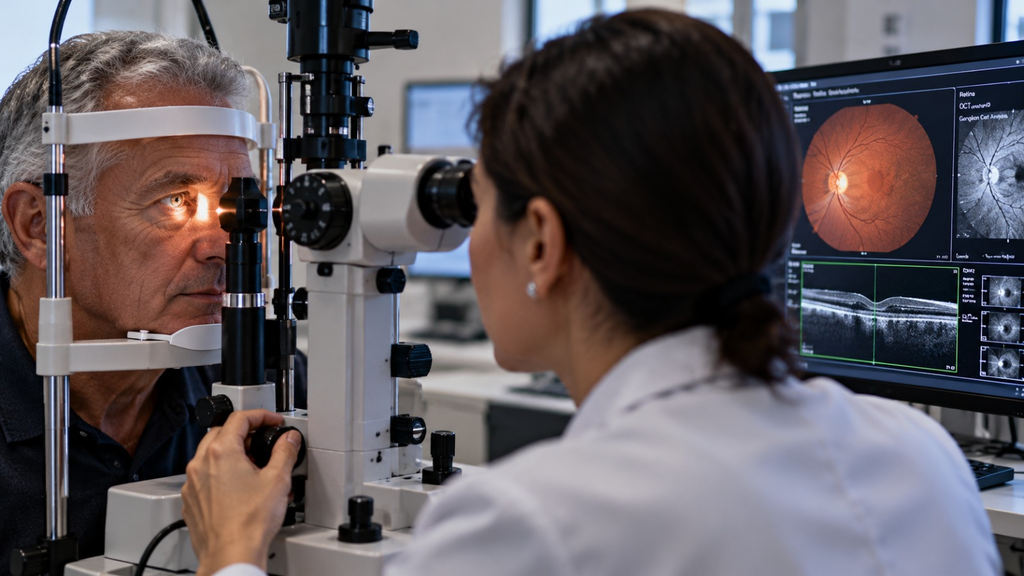
NAION is a form of optic-nerve injury caused by impaired blood flow. It can produce sudden, irreversible vision loss. Diabetes itself, along with cardiovascular risk factors common among people prescribed GLP-1 drugs, can also increase risk. Observational studies have raised concern about an association between semaglutide and NAION, but population-level findings do not automatically establish that a drug caused an individual patient’s injury.
The regulatory evidence has also moved beyond a purely hypothetical signal. In June 2025, the European Medicines Agency concluded that NAION is a very rare side effect of semaglutide, potentially affecting up to 1 in 10,000 users. Its review of epidemiological studies suggested approximately one additional case per 10,000 person-years of treatment among adults with type 2 diabetes. That is an important finding, but it does not establish what caused Gillen’s particular vision loss. The FDA has separately identified NAION as a safety signal requiring evaluation.
Why the Lawsuit Is About More Than One Patient
That distinction between recognized risk and individual causation is exactly where litigation grows.
Plaintiffs argue manufacturers should have warned more clearly about potential vision risks. Novo Nordisk, which manufactures Ozempic, disputes the claims and maintains that semaglutide has a well-established safety profile supported by extensive clinical evidence. The federal NAION cases have been consolidated for pretrial management in Pennsylvania, separately from litigation involving gastrointestinal injuries. Courts will have to evaluate scientific evidence, labeling duties and individual causation.
For Gillen, the Consequences Are Already Personal
For Gillen, those abstractions sit behind a much more immediate reality. The Post reports that his vision deteriorated rapidly, leaving him blind. He has since sought training to adapt to life with vision loss, while supporters have raised funds for an initiative called the Coach BlindED Foundation, intended to support visually impaired people and vision-loss research. Whether a court ultimately attributes his injury to semaglutide or not, his loss is real.
A Rare Risk Can Still Be Devastating
This is the uncomfortable middle ground that health media often handles badly. One side turns an adverse-event report into proof that a blockbuster drug is secretly poisonous. The other side treats low absolute risk as if the people who experience rare events are statistical inconveniences. Neither approach is serious.
Medicines can be highly beneficial at a population level and still carry rare, devastating risks.
A signal can deserve investigation before causation is fully established in every individual case. Patients deserve warnings proportional to the evidence, not fear proportional to the virality of the story.
The Difference Between Statistics and Someone’s Life
The GLP-1 era is now large enough that rare events will surface simply because millions of people are exposed. That makes pharmacovigilance more important, not less. It also makes careful denominator thinking essential. Hundreds of lawsuits can sound enormous until compared with the vast number of people treated; lawsuit counts alone cannot establish how frequently an injury occurs or whether a medicine caused it. One irreversible injury can sound statistically tiny until it happens to you.
Gillen’s case deserves neither dismissal nor sensational certainty. It deserves what every serious drug-safety story deserves: evidence, context and enough humility to admit when science has not finished answering the question.