
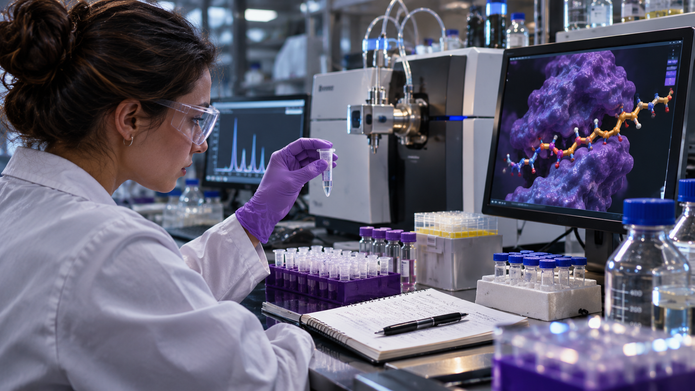
The search for antibiotics has an inconvenient truth: some of the most promising new molecules come from organisms that have been making chemical weapons against one another for millions of years. A marine-derived bacterium has now yielded two previously unreported peptide-like compounds, offering another example of how natural-product chemistry can still surprise researchers in an era dominated by computational drug discovery.
In an October 23 paper in The Journal of Antibiotics, scientists described pobacilamides A and B, two linear depsipeptides isolated from the culture broth of a marine-derived Bacillus strain designated ROA-056. Depsipeptides contain both conventional peptide bonds and ester linkages. That mixed chemistry can give them different conformational and biological properties from simple chains made entirely of amino acids.
Two New Compounds From a Marine Bacterium
The investigators used mass spectrometry and nuclear magnetic resonance methods to establish the compounds’ structures. Both included valine and hydroxy-acid components, while pobacilamide A also contained leucine. The team used additional chemical methods to assign stereochemistry—the three-dimensional orientation of the constituent building blocks.
This is not ornamental detail. For small natural products, the wrong stereochemical assignment can mislead later attempts to synthesize or optimize a molecule. Two structures can appear almost identical on paper but behave differently when they encounter biological targets.
The pobacilamides are particularly interesting because they are linear depsipeptides, rather than the cyclic molecules often associated with this broader chemical family. Their structures add to the catalog of naturally occurring compounds available for further investigation.
The Antibacterial Result Was Selective
The striking finding was selective antibacterial activity. The compounds inhibited tested Gram-positive organisms, including Bacillus subtilis and Kocuria rhizophila, with reported minimum inhibitory concentrations ranging from 0.25 to 4 micrograms per milliliter.
Pobacilamide B showed the strongest reported activity against K. rhizophila, at 0.25 micrograms per milliliter. The compounds did not show antibacterial activity against the Gram-negative strains included in the experiments.
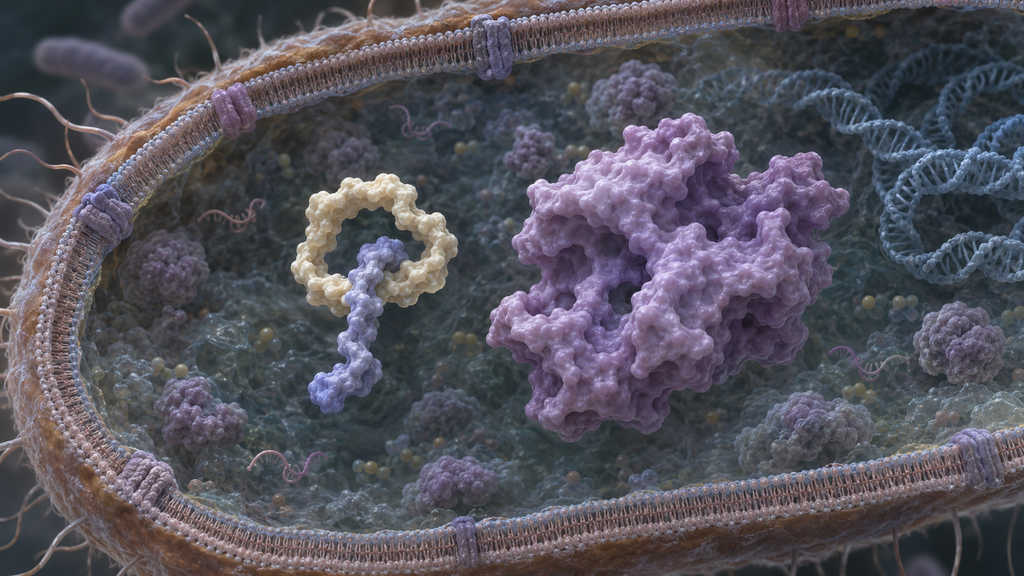
The Gram-positive versus Gram-negative distinction is particularly revealing. Gram-negative bacteria have an additional outer membrane that can obstruct many compounds, among other resistance mechanisms. A molecule that works against selected Gram-positive test strains may be ineffective against an important Gram-negative pathogen.
Even among Gram-positive species, activity against laboratory strains does not automatically translate into efficacy against difficult clinical isolates. The researchers established a pattern of antibacterial activity, but they did not identify the precise molecular target responsible for it.
A Low MIC Is Not Proof of a New Antibiotic
Those numbers are a reason to investigate, not a reason to announce a new antibiotic for patients. A minimum inhibitory concentration, or MIC, is a laboratory measurement of the concentration needed to stop visible bacterial growth under defined conditions.
It does not establish whether a compound can reach an infection site in the body, survive metabolism, avoid toxicity or outperform existing drugs.
This distinction matters because promising antibacterial chemistry frequently encounters obstacles during drug development. A compound may inhibit bacterial growth in a controlled laboratory environment while proving unstable, poorly distributed or harmful at concentrations required for treatment.
Antibacterial potency is only one part of that equation. The biological context in which the compound must operate can be just as important as its initial laboratory performance.
The Missing Questions: Mechanism, Toxicity and Human Evidence
The paper does not establish a mechanism of action, an animal efficacy profile or human tolerability. Those questions will determine whether pobacilamides are merely interesting additions to the chemical catalog or plausible starting points for drug discovery.
Future experiments would need to determine how the compounds interact with bacterial cells, whether they affect specific molecular pathways and how consistently their activity appears across a broader selection of organisms.
Researchers would also need to evaluate toxicity, chemical stability, synthesis and pharmacokinetic behavior before considering therapeutic development. A molecule with strong laboratory activity may still prove unsuitable for administration to living organisms.
The compounds might also prove useful as research probes even if they never become medicines. Identifying an unusual molecular structure can help researchers understand microbial biosynthesis and expand the chemistry available for future studies.
Why Marine Microbes Still Matter to Drug Discovery
Marine microbial discovery remains a compelling counterpoint to the idea that every useful peptide must be designed on a computer. Nature has already performed vast chemical experiments through evolution, and researchers are still finding structures they have not cataloged.
Marine environments contain diverse microbial communities that produce chemical substances to interact with competitors and their surroundings. Some of those molecules may eventually provide starting points for new research tools or therapeutic strategies.
The discovery of pobacilamides A and B demonstrates why investigating microbial natural products remains worthwhile. It also shows the importance of separating chemical novelty from established medical usefulness.
The most responsible headline is neither that the ocean has cured resistant infections nor that two obscure molecules are irrelevant. It is that a bacterium produced selective antibacterial chemistry worth understanding.
The Discovery Is Real. The Therapeutic Potential Remains Open.
That is the wildcard appeal of pobacilamides: a modest, well-defined laboratory result that opens a larger question. The study identifies two new compounds, establishes their chemical structures and demonstrates antibacterial activity against selected organisms.
What it does not establish is equally important. There is no demonstrated human efficacy, no confirmed clinical safety profile and no established molecular mechanism that would justify presenting either compound as a medicine.
The next step is not marketing. It is mechanism, toxicity, synthesis and broader pathogen testing.
Until those data exist, the story belongs in the science section—not the pharmacy.