
Today the phrase “receptor agonist” appears in everyday discussions of weight-loss medicines. That vocabulary rests on decades of experiments showing that cells possess specific molecular receivers and that different signals can activate them.
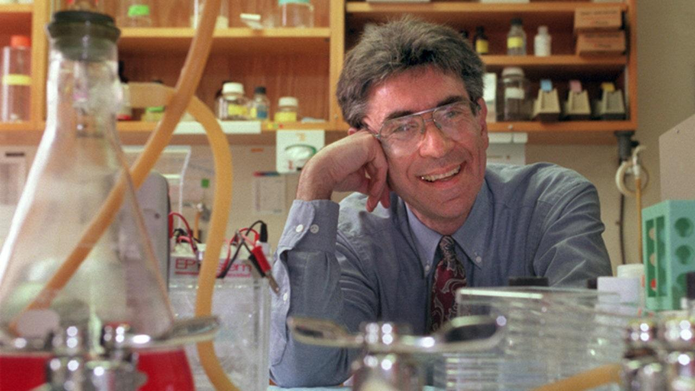
Robert J. Lefkowitz helped turn receptors from difficult-to-test biological concepts into measurable, isolatable and genetically understood proteins.
His work on G protein-coupled receptors, or GPCRs, earned a shared 2012 Nobel Prize in Chemistry with Brian Kobilka.
This is a historical feature about documented scientific achievements, not an October 2026 interview or new research announcement. Its relevance lies in the experimental framework that continues to shape modern receptor-targeted medicines, including therapies acting on peptide-hormone receptors.
The ACTH Experiment That Made Receptors Measurable
In his Nobel autobiography, Lefkowitz describes an early career aimed at clinical medicine rather than a predetermined life in the laboratory.
At the National Institutes of Health between 1968 and 1970, he was assigned the difficult task of studying receptors for adrenocorticotropic hormone, or ACTH, a peptide hormone involved in regulating adrenal hormone production.
Receptors were already established concepts in pharmacology, but direct experimental methods for identifying and characterizing particular receptor proteins remained limited.
Working under mentors Jesse Roth and Ira Pastan, Lefkowitz investigated whether radioactive labeling could reveal specific hormone-binding sites on cell membranes.
His early experiments were frustrating. The biological signals were difficult to distinguish from nonspecific binding, and obtaining reproducible measurements required substantial technical refinement.
Over time, radioligand-binding approaches helped make these interactions experimentally accessible. By tracking labeled molecules and measuring their association with cellular preparations, researchers could characterize binding behavior rather than relying entirely on indirect physiological responses.
The ability to measure specific binding sites represented a conceptual turning point.
A receptor could now be investigated as a measurable molecular target, not merely inferred from a drug’s biological effects.
From Binding Assays to an Entire Family of Cell Receptors
At Duke University, Lefkowitz and colleagues developed increasingly sophisticated approaches to studying adrenergic receptors, which respond to hormones and neurotransmitters such as adrenaline.
Radioligand-binding assays helped researchers distinguish specific receptor interactions from misleading experimental signals. These methods also supported the identification and characterization of different receptor subtypes.
Work involving Marc Caron, Brian Kobilka and other collaborators contributed to receptor purification, biochemical characterization and molecular cloning.
A particularly important breakthrough came in 1986, when researchers cloned the gene encoding the beta-2 adrenergic receptor.
Its sequence revealed a striking similarity to rhodopsin, the light-sensitive receptor found in the retina. This connection helped establish that apparently different receptors belonged to a much larger molecular family.
The proteins shared a characteristic architecture in which seven segments cross the cell membrane. These became widely known as seven-transmembrane receptors, or G protein-coupled receptors.
That discovery changed how researchers understood cellular communication. Receptors responding to different signals could be investigated using related structural and biochemical principles.
The receptor was no longer merely an abstract pharmacological idea. Scientists could study its amino-acid sequence, cellular location, ligand-binding properties and signaling behavior.
Receptors Are Not Simple On-Off Switches
Lefkowitz’s research did not stop with identifying receptor proteins.
His laboratory helped investigate how GPCR signaling is regulated, including the processes through which receptor responses become reduced or altered after sustained stimulation.
These studies contributed to the discovery and characterization of G protein-coupled receptor kinases and arrestins, proteins involved in controlling receptor signaling and desensitization.
The findings challenged an overly simple interpretation of receptor activity.
A receptor does not necessarily behave like a switch that produces one identical response every time a ligand binds. Its activity can depend on cellular context, interacting proteins, receptor regulation and the particular ligand involved.
Later research on biased agonism explored whether certain ligands preferentially activate some downstream signaling pathways over others.
This possibility is attractive for drug design. Researchers may be able to distinguish desired therapeutic signaling from pathways associated with unwanted effects.
However, preferring one signaling pathway does not automatically produce a safer medicine. The clinical consequences depend on the receptor, tissue, disease and compound being studied.
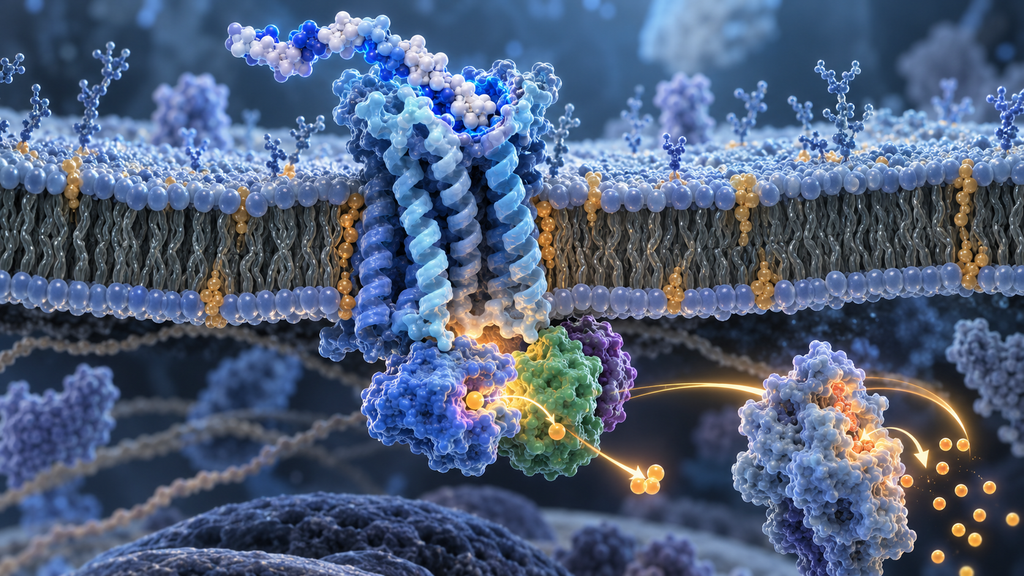
These discoveries helped establish receptors as dynamic signaling systems rather than passive docking sites for hormones and medicines.
The 2012 Nobel Prize Recognized a Collaborative Revolution
On October 10, 2012, the Royal Swedish Academy of Sciences announced that Robert Lefkowitz and Brian Kobilka would share the Nobel Prize in Chemistry for their studies of G protein-coupled receptors.
The award recognized a series of discoveries that changed the understanding of how cells detect and respond to chemical signals.
But the history also corrects the popular myth of solitary scientific discovery.
Lefkowitz’s work involved students, research fellows, collaborators and contributions from laboratories across the field. His Nobel autobiography credits the important roles played by colleagues, including Marc Caron and Brian Kobilka.
Kobilka’s contributions extended receptor molecular biology into structural investigation, providing detailed insights into how GPCRs recognize ligands and undergo activation.
The broader field advanced through biochemical purification, molecular cloning, pharmacological measurement, structural biology and experiments examining intracellular signaling.
These developments were connected but distinct achievements, accomplished across decades of research.
Lefkowitz’s historical importance lies not in having performed every experiment himself, but in helping establish experimental methods and scientific questions that reshaped modern pharmacology.
The Connection to Today’s Peptide and GLP-1 Medicines
The connection to modern metabolic medicine is powerful, but it must be described precisely.
Many peptide hormones transmit biological signals through GPCRs. These include hormone systems involving GLP-1, glucose-dependent insulinotropic polypeptide, or GIP, and glucagon.
Researchers developing medicines that act on these receptors investigate ligand binding, receptor activation, downstream signaling and the physiological consequences of stimulating particular pathways.
Understanding receptor biology helps explain why compounds acting on related hormonal systems may produce different effects on glucose regulation, appetite, energy balance and other metabolic processes.
But Lefkowitz did not invent modern GLP-1 medicines, and his Nobel Prize was not awarded for an obesity treatment.
His contributions helped establish the broader scientific framework through which receptor-targeted medicines could be investigated, compared and understood.
That framework remains essential because receptor affinity is not the same as therapeutic efficacy. A molecule may bind strongly to a receptor without producing the desired biological response.
Similarly, short-term signaling in a laboratory model does not establish durable clinical benefit, appropriate dosing or long-term safety.
These distinctions matter whenever experimental peptides are discussed as though a molecular mechanism alone proves therapeutic value.
Peptide medicine often moves quickly from a molecular name to an ambitious claim. Lefkowitz’s career reminds us of the experiments in between.
Before a receptor can be targeted responsibly, researchers must establish its biological properties, characterize its signaling behavior and connect molecular activity to meaningful physiological outcomes.
His story is one of repeated technical effort, changing scientific models and a field transformed by the ability to measure what once seemed almost inaccessible.
Modern receptor-targeted peptide medicine rests in part on a principle his work helped establish: understanding a biological signal begins with proving exactly how the cell receives and responds to it.