
Modern peptide medicine runs on numbers: insulin levels, hormone concentrations, drug exposure in the blood. It is easy to forget that, for much of the twentieth century, many of those numbers could not be measured reliably at the tiny concentrations present in the human body.
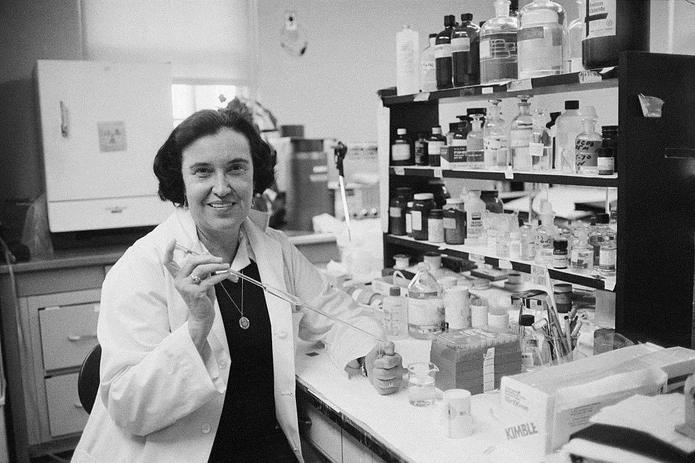
Rosalyn Yalow, a physicist working alongside physician Solomon Berson at a Veterans Administration hospital in the Bronx, helped change that. Their technique, radioimmunoassay, grew out of a puzzling observation about insulin and became one of the most consequential measurement methods in modern medicine.
The research began in modest surroundings. Yalow established an early laboratory in a converted janitor’s closet, assembling equipment and applying her knowledge of radioactive isotopes to medical questions. Over the following decades, that work helped transform how scientists measured hormones and investigated endocrine disease.
In 1977, Yalow received half of the Nobel Prize in Physiology or Medicine for developing radioimmunoassays of peptide hormones. The award recognized a scientific breakthrough that had been built through years of collaboration with Berson, who had died five years earlier.
Rosalyn Yalow: A Physicist Who Found Her Way Into Medicine
Rosalyn Yalow was born Rosalyn Sussman in New York City on July 19, 1921, and grew up on Manhattan’s Lower East Side. Her parents had not completed high school, but they encouraged her education and her interest in reading.
At Hunter College, she initially pursued chemistry before turning toward physics. Her interest in nuclear science developed during a period when discoveries in atomic structure and radioactivity were transforming the physical sciences.
She graduated from Hunter in 1941 and entered the University of Illinois that September. According to the Science History Institute, she was the first woman graduate student in its physics department since 1917.
At Illinois, she met fellow physics student Aaron Yalow, whom she married in 1943. She completed her doctorate in nuclear physics in 1945 and subsequently returned to New York to teach at Hunter College.
Her transition into medical research began in 1947, when she started working part-time at the Bronx Veterans Administration Hospital. The institution was expanding its use of radioactive isotopes for clinical investigation, creating an opportunity for a physicist whose expertise lay in measuring radiation.
At first, Yalow worked in an old janitor’s closet converted into laboratory space. Scientific equipment was limited, and some instruments had to be constructed or adapted for the experiments she wanted to perform.
The setting was far removed from the large biomedical research facilities associated with modern pharmaceutical development. Yet the essential capabilities were there: a scientist trained in precise physical measurement, access to radioactive tracers and a hospital filled with clinical questions.
In 1950, Yalow joined the hospital full-time, becoming a physicist and assistant chief of its radioisotope service. That same year brought the collaborator who would help turn her measurement expertise toward one of medicine’s most important hormones.
The Partnership With Solomon Berson
Solomon Berson was a physician with extensive clinical training and an interest in quantitative medical research. He joined Yalow at the Bronx hospital in 1950, beginning a scientific partnership that would last approximately 22 years.
The pairing combined disciplines that were not always closely connected in medical laboratories of the period. Yalow understood radiation physics and the instrumentation needed to measure radioactive signals. Berson brought clinical knowledge, physiological questions and experience investigating human disease.
According to the Science History Institute, Berson had already accepted another hospital position before meeting Yalow. Their intellectual compatibility helped persuade him to change his plans and join her work in the Bronx.
Their early research included studies of blood volume, protein distribution and the movement of radioactive substances through the body. These investigations helped establish the methods they would later apply to insulin.
The collaboration was unusually productive because the two researchers approached biological questions from complementary directions. One understood the precision of the measurement. The other understood the clinical importance of what was being measured.
That combination eventually led them toward insulin, the peptide hormone central to diabetes treatment and glucose regulation.
Insulin was already being studied by researchers around the world. Its molecular structure was another major scientific challenge, pursued by scientists including Dorothy Hodgkin, whose work helped reveal insulin’s three-dimensional architecture.
But knowing the molecular structure of a hormone and measuring its concentration inside a patient’s bloodstream were different scientific problems.
Yalow and Berson were about to make progress on the second.
An Insulin Experiment Revealed an Unexpected Antibody Response
During the 1950s, people with diabetes commonly received insulin obtained from animals, particularly cattle and pigs. These preparations could differ from human insulin and sometimes provoke immune responses.
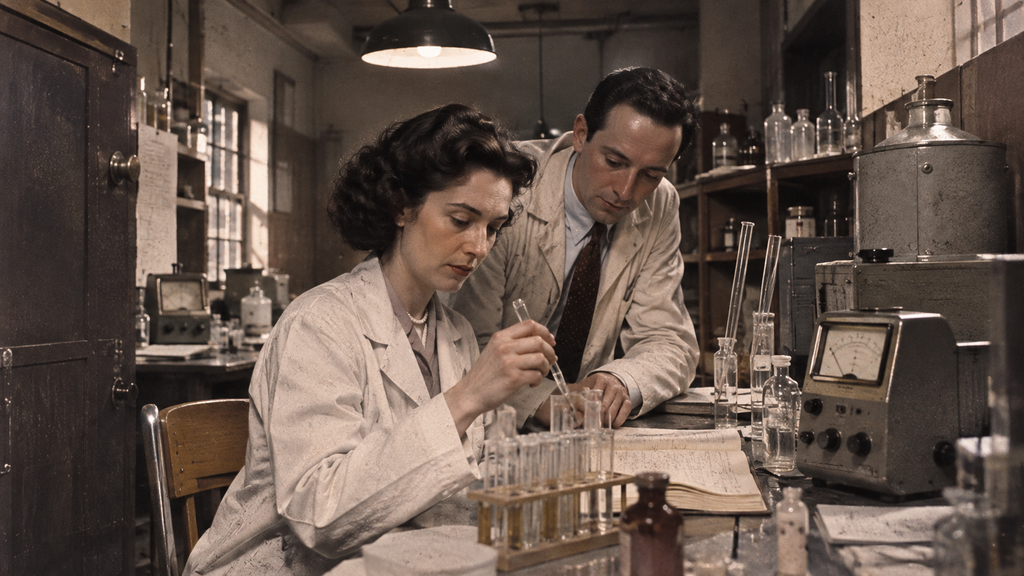
Yalow and Berson wanted to understand what happened to insulin after it entered the bloodstream. They used radioactively labeled insulin, attaching radioactive iodine so that the hormone’s distribution and metabolism could be tracked through measurable radiation signals.
The researchers observed an unexpected pattern. In some patients who had previously received insulin treatment, labeled insulin remained in circulation longer than anticipated.
One explanation was that the insulin molecules were interacting with something in the blood rather than circulating entirely in their free form.
The team showed that insulin-treated patients could develop insulin-binding antibodies. These antibodies formed complexes with insulin, altering how the labeled hormone behaved and helping explain the unusual experimental results.
A major report published in The Journal of Clinical Investigation in February 1956 documented this finding. Alongside Berson and Yalow, the paper listed Arthur Bauman, Marcus Rothschild and Katharina Newerly as authors.
The discovery challenged assumptions about how insulin behaved in patients receiving long-term treatment. It also showed that a peptide hormone could trigger an immune response and that antibody binding could significantly affect its measured behavior.
The clinical implications required care. Antibody binding did not mean that insulin stopped working in every affected patient, nor did it establish that all insulin-treated patients would develop clinically important resistance.
For Yalow and Berson, however, the finding suggested something more powerful than an explanation of insulin metabolism.
If antibodies could bind insulin in a reproducible way, and radioactive labeling could reveal that interaction, perhaps the same mechanism could be used to measure extraordinarily small amounts of insulin in blood.
An observation that initially complicated the interpretation of insulin experiments became the foundation of an entirely new measurement technique.
How Radioimmunoassay Turned Antibodies Into a Molecular Ruler
Radioimmunoassay, or RIA, uses the specificity of antibodies and the sensitivity of radioactive measurement to determine the concentration of a biological substance.
The method is based on a competition. A known amount of radioactively labeled hormone and an unknown amount of unlabeled hormone from a biological sample compete for a limited number of antibody-binding sites.
As the concentration of unlabeled hormone increases, it generally displaces more labeled hormone from those binding sites. Researchers can measure the radioactivity associated with the antibody-bound fraction and compare the result with a standard curve created from known hormone concentrations.
This allows the unknown concentration in the patient sample to be calculated.
The essential breakthrough was not that antibodies inherently preferred natural insulin over labeled insulin. It was that carefully characterized competition between the two could generate a reproducible quantitative signal.
In November 1959, Yalow and Berson published a report in Nature describing an immunological approach to measuring insulin in human plasma.
They followed that work with a detailed paper published on July 1, 1960, in The Journal of Clinical Investigation, titled Immunoassay of Endogenous Plasma Insulin in Man.
That study described an assay capable of measuring the small concentrations of insulin naturally circulating in human blood. The researchers also investigated insulin concentrations under different physiological and clinical conditions, including responses to glucose and abnormalities associated with diabetes.
The significance was enormous. Scientists no longer had to rely exclusively on indirect physiological responses to infer how much of a peptide hormone might be present. They could begin measuring it directly with previously unavailable sensitivity.
The method expanded far beyond insulin. Radioimmunoassays made it possible to investigate numerous peptide hormones and other biologically active substances, supporting research into endocrine regulation, reproductive physiology, growth, metabolism and disease.
RIA-related techniques also contributed to diagnostic applications, including screening for hepatitis-associated antigens and measuring certain drugs and other biological molecules.
Modern laboratories now frequently use nonradioactive immunoassays, including enzyme-based and chemiluminescent methods. These are not identical to the original RIA procedure, but they belong to a broader history of highly sensitive measurements using specific molecular recognition.
For peptide science, the transformation was especially important. Hormones could now be studied as changing concentrations in real biological systems, rather than only as isolated substances or indirectly observed physiological effects.
Antibodies that had complicated insulin research became the molecular ruler that helped measure it.
A Nobel Prize, an Absent Collaborator and a Lasting Legacy
Recognition of Yalow and Berson’s work grew as radioimmunoassay became increasingly important to biomedical research.
In 1961, Yalow received the American Diabetes Association’s Eli Lilly Award. In 1976, she became the first woman to receive the Albert Lasker Basic Medical Research Award.
The highest scientific recognition followed in 1977, when Yalow was awarded half of the Nobel Prize in Physiology or Medicine for the development of radioimmunoassays of peptide hormones.
The other half of the prize was shared by Roger Guillemin and Andrew Schally for discoveries concerning peptide hormone production in the brain.
One name was missing from the award ceremony. Solomon Berson had died in 1972, five years before the Nobel recognition. Because the Nobel Prize is not awarded posthumously under its established rules, he could not share the honor.
Yalow nevertheless continued to acknowledge his scientific contributions. Following his death, she named their Bronx laboratory the Solomon A. Berson Research Laboratory so that his name would remain connected to its published work.
The gesture reflected the collaborative nature of a discovery sometimes summarized through a single Nobel laureate. Radioimmunoassay emerged from the interaction of physics, clinical medicine, immunology and the work of multiple researchers over several years.
Yalow continued conducting research at the Veterans Administration hospital and later held academic appointments, including at Mount Sinai School of Medicine. She received the National Medal of Science in 1988 and retired from the VA laboratory in 1991.
She died in New York on May 30, 2011, leaving behind a method that fundamentally changed how researchers investigate hormones and biological signaling.
The importance of that achievement extends into modern peptide medicine. Scientists studying insulin, growth hormone, gut hormones and other signaling molecules depend on reliable ways to measure their concentrations and understand how those levels change over time.
Later discoveries, including Masayasu Kojima’s identification of the stomach-derived hormone ghrelin, emerged within a scientific landscape transformed by increasingly precise hormone measurement.
Radioimmunoassay was not the only method behind those later advances, and modern measurement technology has continued to evolve. But Yalow and Berson helped establish a principle that remains central to biomedical science: understanding a hormone requires being able to detect and measure it accurately.
Their scientific story also offers a warning against reducing major discoveries to a single person, a single experiment or a single moment. The technique emerged from sustained collaboration, unexpected results and the willingness to apply physical measurement to clinical questions.
Today, peptide drugs are evaluated through hormone concentrations, pharmacokinetic studies, laboratory biomarkers and clinical outcomes. Much of that scientific infrastructure rests on decades of progress in analytical measurement.
One important chapter began with a physicist, a physician and a converted janitor’s closet in the Bronx.
Original research: Yalow R.S. and Berson S.A. Immunoassay of Endogenous Plasma Insulin in Man. The Journal of Clinical Investigation, July 1, 1960.
Earlier insulin-antibody research: Berson S.A. et al. Insulin-I131 Metabolism in Human Subjects: Demonstration of Insulin Binding Globulin in the Circulation of Insulin Treated Subjects. The Journal of Clinical Investigation, February 1956.
Early immunoassay publication: Yalow R.S. and Berson S.A. Assay of Plasma Insulin in Human Subjects by Immunological Methods. Nature, November 21, 1959.
Historical biography: Rosalyn Yalow and Solomon A. Berson, Science History Institute.
Nobel Prize documentation: Rosalyn Yalow — Nobel Prize in Physiology or Medicine 1977, NobelPrize.org.
Archival photograph reference: History of VA Research, Bronx Veterans Medical Research Foundation.