
Historical profile. Leonard Thompson was 14 years old and weighed approximately 65 pounds when a house physician at Toronto General Hospital administered 15 millilitres of murky beef-pancreas extract on January 11, 1922. The dose, divided between two injection sites, made him the first person to receive the Toronto researchers’ insulin extract by injection for diabetes. His blood sugar fell, but his condition did not improve. The extract was too impure and insufficiently effective to save him. Twelve days later, a more purified preparation did what the first had not, and medicine changed.
A century on, when diabetes and obesity medicines based on peptide hormones are among the world’s most important drugs, the boy at the start of insulin therapy is still mostly remembered as a name in a footnote. The scientists who discovered and refined insulin became famous. Thompson, whose failing body became the first successful human test of their work, left behind remarkably little of his own story.
What survives is a detailed hospital record, the history assembled by the University of Toronto’s insulin archives, and fragments of his later life. Together, they tell a story that began with starvation, passed through a failed experiment and a manufacturing crisis, and gave a dying boy another thirteen years.
A Toronto Boy on a Starvation Diet
Leonard Thompson was born in Toronto in 1908 to Harry and Florence Thompson. According to a profile published by the Royal Canadian Institute for Science, he grew up in a working-class neighborhood near Kingston Road and Gerrard Street, in what is now the city’s Upper Beach area. He was an active child who enjoyed football and other sports. Around 1919, when he was eleven, he developed diabetes.
At the time, a diagnosis of what was then called juvenile diabetes was effectively a death sentence. There was no reliable way to replace the insulin that the pancreas could no longer supply. Physicians prescribed severely restricted diets, attempting to reduce the amount of sugar the body had to handle. Some patients survived for months or years, but the treatment often meant slowly starving people who were already dangerously ill.
By the time Thompson was admitted to Toronto General Hospital on December 2, 1921, he was in desperate condition. University of Toronto records put his weight at approximately 65 pounds. The Royal Canadian Institute describes him as five feet eleven inches tall. He was pale, his hair was falling out, his abdomen was swollen, and his breath carried the smell of acetone, a sign of severe metabolic illness.
His diet provided around 450 calories a day. The restrictions were intended to keep him alive, but his weight and strength had collapsed. He had been diabetic for approximately two years and was now approaching a coma. His parents agreed to let the Toronto doctors try an experimental extract of pancreas, a preparation that had shown promise in laboratory animals but had never been successfully used to treat a human patient.
The only treatment keeping Leonard Thompson alive was also starving him.
The First Insulin Shot Failed
On January 11, 1922, Ed Jeffrey, a house physician at Toronto General Hospital, administered an extract prepared by Frederick Banting and Charles Best. The treatment was supervised by senior clinicians, including Walter Campbell. The recorded dose was fifteen cubic centimetres, equivalent to fifteen millilitres, divided into two injections of 7.5 millilitres, one in each buttock.
The material was far removed from the clear, precisely manufactured insulin solutions used today. Walter Campbell described it as “a thick brown muck.” It contained material extracted from beef pancreas and had not been purified sufficiently to make a reliable human medicine.
The results were disappointing. Thompson’s blood sugar fell from 0.440% to 0.320%, equivalent to approximately 440 and 320 milligrams per decilitre in modern units. His daily urinary glucose excretion fell only modestly, from 91.5 grams to 84 grams. The tests for ketones remained strongly positive, and doctors saw no meaningful improvement in his clinical condition.
Worse, impurities in the extract caused a sterile abscess at one injection site. The treating physicians decided that the slight reduction in blood sugar did not justify continuing with a preparation that produced such a reaction. Further injections of that extract were stopped.
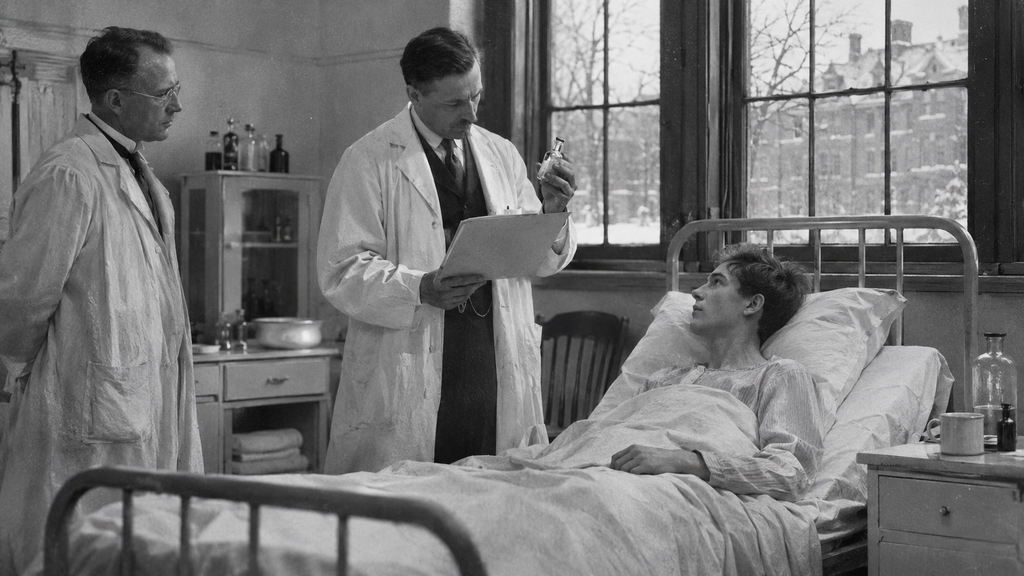
The failure matters because the first human test is often remembered as the moment insulin was discovered to work. In reality, the January 11 experiment produced a measurable biological response but no useful clinical recovery. The pancreas extract could influence blood sugar, yet the dose, potency and purity were not adequate to reverse Thompson’s life-threatening condition.
For the Toronto team, having a promising biological substance was not the same as having a medicine. The difference would be decided by a biochemist working to remove the contaminants.
Twelve Days and a Biochemist’s Fix
James Bertram Collip had joined the Toronto research group to help purify the pancreatic extract. His contribution was chemical rather than surgical. Instead of changing the idea behind Banting and Best’s experiments, he worked on separating the active material from the other substances extracted from animal tissue.
On the night of January 19, Collip found a promising purification method. By adjusting the concentration of alcohol in the extract, he could cause unwanted proteins to separate from the solution while recovering the biologically active material. The process yielded a preparation that was substantially cleaner and more suitable for administration to patients.
On Monday, January 23, Walter Campbell began administering Collip’s improved extract to Thompson. The response was dramatically different. Over approximately one day, Thompson’s blood sugar fell from 0.520% to 0.120%, or about 520 to 120 milligrams per decilitre. Sugar in his urine nearly disappeared, and the previously persistent ketones were no longer detectable.
His clinical condition also improved. He became more alert and stronger. The treatment continued over the following days, with repeated injections of the improved preparation. What the first dose had only suggested was now unmistakable: the pancreatic extract could reverse the metabolic crisis caused by insulin deficiency.
The distinction was revolutionary. Researchers had suspected for decades that the pancreas produced an internal secretion needed to regulate blood sugar. Thompson’s response provided persuasive human evidence that the secretion could be isolated, purified and used therapeutically.
Within weeks, the Toronto team began reporting successful treatment in other patients. Their clinical paper appeared in the Canadian Medical Association Journal in March 1922. On May 3, J.J.R. Macleod presented the group’s work to American physicians in Washington, D.C. The diabetes specialist Frederick Allen acknowledged the Toronto researchers’ priority, and the presentation received a standing ovation.
The breakthrough was not simply finding a substance that lowered blood sugar. It was making that substance pure enough to help a human being.
Insulin Ran Out, and He Went Back to Starving
The success created a problem the researchers had not solved. They could produce small quantities of active insulin, but turning a delicate laboratory procedure into dependable large-scale manufacturing was another challenge entirely.
The University of Toronto began transferring production to its Connaught Anti-Toxin Laboratories. Collip was put in charge of the manufacturing work, and special equipment was installed. Yet when researchers attempted larger batches, the preparations sometimes had little or no potency. Even returning to the original laboratory procedures did not reliably reproduce the January breakthrough.
From approximately early March until the middle of May 1922, Toronto endured what its historical archive calls an insulin famine. Requests for the new medicine were arriving from desperately ill patients and physicians, but supply was painfully limited. The archive records that one patient died after treatment supplies ran out.
Thompson survived that shortage by returning to the same restrictive diet he had followed before the first injections. The treatment that had rescued him in January was not yet consistently available. His case demonstrated a second problem of medical innovation: developing a therapy and delivering it reliably to the people who need it are two separate achievements.
The Toronto group eventually turned to industrial assistance. In late May 1922, the University of Toronto and Eli Lilly agreed to collaborate on insulin production, sharing technical knowledge while developing a broader manufacturing system. Connaught would serve the Canadian market, while Lilly helped scale production in the United States.
By early July, Lilly was shipping potent insulin to Toronto, and the shortage began to ease. The Royal Canadian Institute for Science reports that Thompson returned home in May 1922 and began permanent insulin treatment in October of that year.
For patients living with diabetes, the manufacturing advances were as significant as the laboratory discovery. Insulin had to become reproducible, sufficiently pure and available beyond a handful of experimental cases before its benefits could reach a wider population.
A Short Life, Thinly Documented
What happened to Leonard Thompson after 1922 is surprisingly difficult to reconstruct. His hospital treatment was recorded in remarkable detail, but the surviving sources reveal little about his later relationships, work or everyday life. The Royal Canadian Institute for Science acknowledges that relatively little is known about him after he returned home.
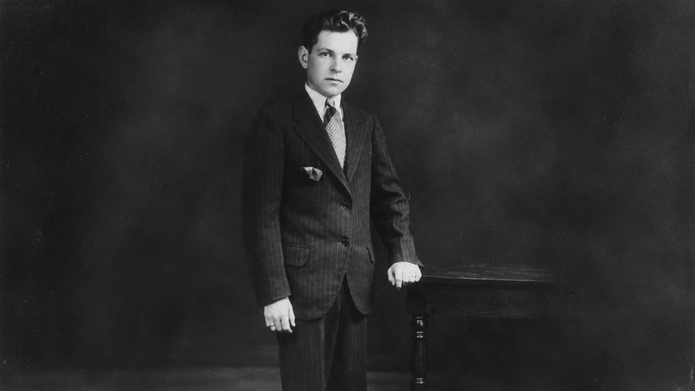
One of the few surviving photographs shows Thompson as a young adult in a formal suit, standing beside a table. University of Toronto Libraries catalogues the portrait as dating from around 1930. In that photograph, he is no longer the desperately ill child described in the hospital records. It is a rare image of someone whose place in medical history was established before he was old enough to understand its scale.
Thompson lived for another thirteen years after the first successful treatment. He died on April 20, 1935, at the age of 27. The University of Toronto’s archival record attributes his death to bronchopneumonia and complications of diabetes. The Royal Canadian Institute’s account emphasizes pneumonia. These descriptions are compatible, but neither tells us much about the life he lived between the breakthrough and his death.
The absence is striking when set against the amount written about the scientists. Frederick Banting and J.J.R. Macleod received the 1923 Nobel Prize in Physiology or Medicine. The contributions of Charles Best and James Collip became the subject of long debates over credit. Thompson had no comparable public platform, and his own perspective survives only indirectly through records made by doctors.
He was fourteen, critically ill, and dependent on adults making decisions about an experimental treatment. His family’s consent opened the door to a medical breakthrough, but the historical record tells us much more about the treatment than about how he experienced it.
Why Leonard Thompson Still Matters
Leonard Thompson’s case sits at the beginning of modern insulin therapy and at an important turning point in peptide medicine. Insulin is a peptide hormone, and its transformation into a reliable pharmaceutical product helped establish many of the scientific and manufacturing questions that continue to shape biological medicines today.
The first injection showed why an active substance is not enough. A compound can work in animals, influence a measurable biological marker in a person, and still fail to deliver an acceptable clinical benefit. The second treatment demonstrated the importance of purification and consistent potency. The shortage that followed showed that even a medicine with extraordinary therapeutic value can remain inaccessible if manufacturing cannot keep up.
Later generations of scientists would learn exactly what insulin was. Frederick Sanger determined its amino-acid sequence, showing how the hormone was assembled at the molecular level. Dorothy Hodgkin and her colleagues established its three-dimensional structure, adding another layer of understanding to a medicine first administered when its molecular architecture remained unknown.
Today, insulin is manufactured using recombinant biotechnology, and other peptide-based therapies, including GLP-1 receptor agonists, are changing the treatment of diabetes and obesity. The molecules and production methods have evolved enormously, but the essential challenges remain familiar: purity, potency, consistency, tolerability and access.
Thompson’s story also complicates the comforting version of scientific progress as a single moment of triumph. On January 11, the experimental treatment failed clinically. On January 23, the purified version worked. Within weeks, the researchers struggled to reproduce it at scale. The eventual success depended on repeated experiments, better chemistry, careful clinical observation and industrial manufacturing.
The boy who weighed approximately 65 pounds did not live to see the century of insulin innovation that followed. But he lived thirteen years longer than his doctors could reasonably have expected before treatment became available. His life was the first human proof of what insulin could do, and his early struggle to obtain enough of it remains a warning about the distance between discovery and access.
The first treatment failed. The second saved his life. Making enough for everyone else was the next battle.
Sources
- University of Toronto Libraries — The Discovery and Early Development of Insulin: From a Patient’s Point of View. Historical collection, accessed November 15, 2026.
- University of Toronto Libraries, Insulin 100 — VI. From Embarrassment to Triumph. Historical exhibition, accessed November 15, 2026.
- University of Toronto Libraries, Insulin 100 — VII. Resurrections in Toronto. Historical exhibition, accessed November 15, 2026.
- University of Toronto Libraries, Insulin 100 — First Clinical Trials. Historical records, accessed November 15, 2026.
- University of Toronto Libraries — Leonard Thompson: Early Patients. Original clinical records and archival description, accessed November 15, 2026.
- Royal Canadian Institute for Science — 100 Lives: Leonard Thompson (1908–1935). Historical profile, accessed November 15, 2026.
- Jim Harris, Origins, Ohio State University — The First Insulin Injection as a Treatment for Diabetes. January 2022.
- University of Toronto Libraries — Formal Photograph of Leonard Thompson. Archival photograph, approximately 1930.