

For most of medical history, the heart was understood primarily as a pump. Glands made hormones; the heart moved blood. In 1981, a pathologist at Queen’s University in Kingston, Ontario, published a short paper that helped break that division.
Adolfo J. de Bold and his colleagues showed that an extract from the heart’s upper chambers made rats excrete extraordinary amounts of salt and water. The active substance would become known as atrial natriuretic peptide, or ANP, establishing the heart as an endocrine organ capable of sending hormonal messages to other parts of the body.
The discovery changed cardiovascular research. It also laid the scientific groundwork for a family of peptides that physicians now measure when evaluating patients with suspected heart failure.
De Bold did not discover every member of that family, and the modern diagnostic tests came from work by many researchers. But his 1981 experiment opened a field that had barely existed before.
This is the story of a scientist who followed an overlooked feature of heart cells from an electron microscope to one of the most consequential discoveries in cardiovascular biology.
From Córdoba to Kingston: The Scientist Behind the Discovery
Adolfo J. de Bold was born on February 14, 1942, in Paraná, Argentina. He studied clinical biochemistry at the National University of Córdoba before moving to Canada in 1968 with his wife and fellow scientist, Mercedes Kuroski de Bold.
According to a 2022 tribute in the Queen’s Alumni Review, the couple began graduate studies at Queen’s University that year. Their supervisor was Sergio Bencosme, an experimental pathologist who helped guide their research.
Mercedes studied the pancreas. Adolfo studied the heart.
The distinction would eventually become less clear than anyone expected.
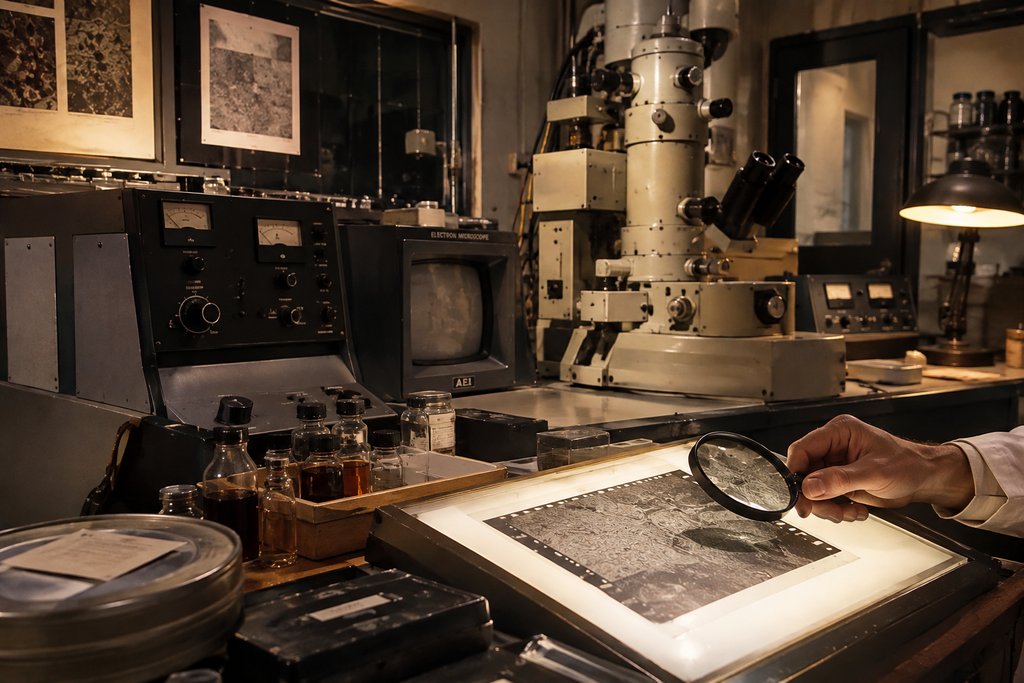
De Bold earned graduate degrees in experimental pathology during the early 1970s and became an assistant professor at Queen’s in 1973. His research focused on an unusual characteristic of cardiac muscle cells: secretory granules inside the atria, the two upper chambers of the heart.
These granules had been described in earlier electron microscopy research, including work published by Bruno Kisch in 1956. They resembled storage structures found in established hormone-producing organs, such as the pancreas and pituitary gland.
Yet their function in the heart remained uncertain.
That was the question de Bold pursued. His work required examining tiny structures, measuring changes in their abundance and determining whether the granules contained a biologically active substance.
One important clue came from experiments involving the body’s water and sodium balance.
In a 1979 paper, de Bold reported that water deprivation and sodium deficiency increased atrial granularity, while a particular experimental condition involving mineralocorticoid treatment and salt loading reduced it.
These results suggested that the granules were connected to how the body regulated fluid and electrolytes.
The heart appeared to contain more than an unexplained cellular structure. It might be storing a chemical signal.
The mystery was not whether the heart could pump blood. It was whether the heart could tell other organs what to do.
The 1981 Experiment That Revealed Atrial Natriuretic Peptide
The decisive experiment was reported on January 5, 1981, in the journal Life Sciences.
De Bold and colleagues H. Brian Borenstein, A. T. Veress and Harald Sonnenberg published a paper titled “A rapid and potent natriuretic response to intravenous injection of atrial myocardial extract in rats.”
The experiment was straightforward in concept. The researchers prepared extracts from atrial tissue and ventricular tissue, then injected them intravenously into anesthetized rats.
The difference was dramatic.
According to the original paper, atrial extract produced a more than 30-fold increase in sodium and chloride excretion. Urine volume increased approximately tenfold, while potassium excretion doubled.
The ventricular extract did not produce the same response.
The researchers also found no significant difference in glomerular filtration rates between the comparison groups. That suggested the dramatic sodium loss was not simply a consequence of filtering more blood through the kidneys.
Instead, the atrial extract appeared to contain a powerful substance that reduced sodium chloride reabsorption in the renal tubules.
This was a fundamental change in how scientists understood the heart.
The atria were not merely passive chambers that filled and emptied. They contained a substance capable of influencing kidney function and the body’s fluid balance.
The active substance became known as atrial natriuretic factor, or ANF, later commonly called atrial natriuretic peptide.
The 1981 paper demonstrated its powerful biological activity before researchers had fully established the peptide’s molecular structure.
That next step followed in 1983, when T. Geoffrey Flynn, Mercedes L. de Bold and Adolfo J. de Bold published the amino-acid sequence of a 28-residue atrial peptide. Japanese researchers, including Kenji Kangawa and Hisayuki Matsuo, independently contributed to the structural identification of natriuretic peptides during the same period.
The significance extended far beyond the original rat experiments. ANP became part of a new understanding of how the heart, kidneys and blood vessels communicate to regulate sodium balance, blood volume and blood pressure.
What had looked like an obscure feature of heart cells was now evidence of an endocrine system.
From Atrial Natriuretic Peptide to BNP Blood Tests
The next major development came in Japan.
In 1988, Tetsuji Sudoh, Kenji Kangawa, Naoto Minamino and Hisayuki Matsuo reported the identification of another natriuretic peptide in the journal Nature.
The researchers had isolated a 26-amino-acid peptide from porcine brain tissue that shared important biological effects with ANP but had a distinct amino-acid sequence.
They called it brain natriuretic peptide, or BNP, after the tissue in which it was first identified.
The name remained even as subsequent research established the heart as a major source of circulating BNP.
In humans, BNP is produced and released in response to increased myocardial wall stress, particularly involving the ventricles.
When the heart is under pressure or volume stress, concentrations of BNP and its related marker NT-proBNP can rise in the bloodstream.
That made the peptide family useful for a purpose very different from the original 1981 experiment: diagnosing disease.
The biological distinction between ANP and BNP also has practical implications for blood testing.
A 2006 review in the Canadian Medical Association Journal reported that circulating ANP has a half-life of approximately three to five minutes, while BNP has a half-life of about 23 minutes. NT-proBNP, a biologically inactive fragment released during proBNP processing, remains in circulation longer, with a reported half-life of roughly 60 to 120 minutes.
These differences affect how the markers can be measured and interpreted.
In the Breathing Not Properly Multinational Study, researchers evaluated 1,586 emergency department patients presenting with shortness of breath.
Using a BNP cutoff of 100 picograms per milliliter, the study reported 90% sensitivity and 76% specificity for identifying heart failure.
Those figures were influential, but they should not be mistaken for universal diagnostic performance across all patients, settings and modern assays.
Current American heart-failure guidelines recommend BNP or NT-proBNP measurements to support the diagnosis or exclusion of heart failure in patients presenting with unexplained shortness of breath. The tests also have established roles in prognosis and risk stratification.
However, interpretation depends on clinical circumstances. Age, kidney dysfunction, other cardiovascular conditions and obesity can affect measured concentrations. BNP and NT-proBNP also require different diagnostic thresholds and cannot be treated as interchangeable numbers.
A blood test can strengthen a diagnosis or make heart failure less likely. It does not replace medical history, examination and appropriate cardiac imaging.
A peptide first discovered through kidney experiments became part of a scientific pathway that allows physicians to measure stress on the heart.
Ottawa, Scientific Recognition and a Career Beyond One Discovery
De Bold’s discovery brought international attention, but his research career continued for decades.
In 1986, he received the Gairdner International Award in recognition of his work on atrial natriuretic factor.
That same year, he moved to Ottawa after cardiovascular surgeon Wilbert Keon invited him to help establish the research program at the University of Ottawa Heart Institute.
De Bold became the institute’s inaugural director of research, serving in that role until 1993, and continued his work in cardiovascular endocrinology until his retirement in 2013.
His research helped establish the heart as an active participant in hormonal regulation, rather than an isolated mechanical organ.
Recognition followed. He was appointed an Officer of the Order of Canada in 1992 and was inducted into the Canadian Medical Hall of Fame in 2014.
His work also inspired generations of researchers investigating cardiovascular peptides, fluid balance and hormonal signaling.
The Queen’s Alumni Review tribute offers a more personal picture of the scientist behind the awards.
Mercedes Kuroski de Bold remained his scientific collaborator and partner throughout their 53-year marriage. Together they raised five children, traveled to scientific conferences and maintained close connections with Argentina.
Outside research, de Bold was also an enthusiastic woodworker. He spent nearly a decade building a 25-foot mahogany boat, later named Miss Cecilia after members of his family.
The project reflected the same patience that characterized his scientific work: years spent on a difficult problem before the finished result became visible.
He published his final scientific paper in 2020 and died in Ottawa on October 22, 2021, at the age of 79.
Why the Heart’s Hormone Still Matters
It is tempting to describe scientific discoveries as straight lines: one experiment produces one molecule, which produces one medicine, which transforms treatment.
De Bold’s legacy is more complicated, and more interesting.
His research did not directly produce the BNP assay used in hospitals, nor did he personally discover every natriuretic peptide identified in subsequent decades.
Instead, his work established the biological principle that made an entire area of research possible.
The heart produces hormones that influence the kidneys, blood vessels and cardiovascular system. Those signals can reveal information about disease, and the pathways they control can become targets for treatment.
That distinction is important in the wider history of peptide medicine.
Understanding how a naturally occurring peptide works is not the same as developing a therapeutic drug. Researchers must determine how the peptide binds to receptors, how long it survives in circulation and whether changing its action improves meaningful clinical outcomes.
Those questions are central to modern peptide pharmacology, from the engineering of longer-lasting medicines described in Grey Pepper’s explanation of how semaglutide was designed to remain active for a week to the receptor discoveries explored in our profile of Robert Lefkowitz and modern drug design.
ANP also helped demonstrate that peptide hormones are not limited to familiar endocrine glands.
The heart is not simply responding to hormonal messages sent by other organs. It helps generate those messages.
And in an emergency department, the measurement of related natriuretic peptides can help a physician assess whether a patient’s breathlessness reflects cardiac dysfunction.
That clinical application emerged through decades of work by many laboratories, but the intellectual turning point remains clear.
In 1981, de Bold and his colleagues injected an extract from the heart into rats and watched the kidneys respond. Their experiment showed that the heart was communicating in a language researchers had not yet learned to read.
Adolfo de Bold proved the heart was more than a pump. Decades later, medicine still reads the messages carried by the peptide family his discovery helped reveal.
Sources and Further Reading
- de Bold AJ, Borenstein HB, Veress AT, Sonnenberg H. A rapid and potent natriuretic response to intravenous injection of atrial myocardial extract in rats. Life Sciences, January 5, 1981.
- de Bold AJ. Heart atria granularity: Effects of changes in water-electrolyte balance. Proceedings of the Society for Experimental Biology and Medicine, 1979.
- Flynn TG, de Bold ML, de Bold AJ. The amino acid sequence of an atrial peptide with potent diuretic and natriuretic properties. Biochemical and Biophysical Research Communications, December 1983.
- Queen’s Alumni Review. Adolfo de Bold: Pioneering doctor unlocked mysteries of the human heart. November 2022.
- Sudoh T, Kangawa K, Minamino N, Matsuo H. A new natriuretic peptide in porcine brain. Nature, March 3, 1988.
- Felker GM, Petersen JW, Mark DB. Natriuretic peptides in the diagnosis and management of heart failure. Canadian Medical Association Journal, September 12, 2006.
- American College of Cardiology, American Heart Association and Heart Failure Society of America. 2022 Guideline for the Management of Heart Failure. Journal of the American College of Cardiology, 2022.
- University of Ottawa Heart Institute. The University of Ottawa Heart Institute family mourns the loss of a pioneer researcher. October 26, 2021.
- Canadian Medical Hall of Fame. Adolfo de Bold: Scientist biography, discoveries and honors.
- Governor General of Canada. Dr. Adolfo J. de Bold, Officer of the Order of Canada.


