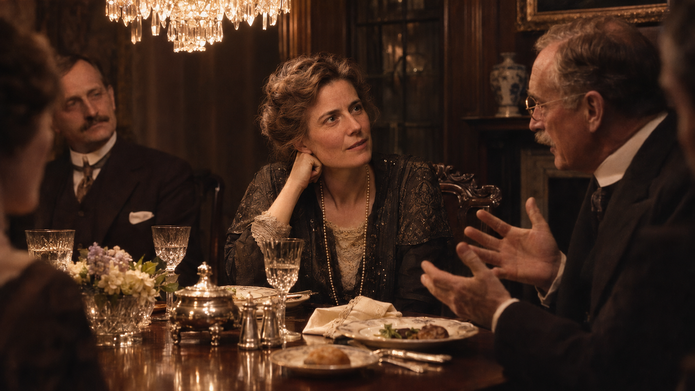
Historical profile. In 1922, a Danish physician named Marie Krogh attended a private dinner in the United States and heard news that would change her life and, eventually, the history of pharmaceutical manufacturing.
The physician sitting beside her was Elliott P. Joslin, an American diabetes specialist. He told her about researchers in Toronto who had discovered insulin and were working to make it available as a medical treatment.
Marie had diabetes herself. Her diagnosis had probably come the year before, and the prospect of a treatment that could replace the hormone her body needed was deeply personal.
Her husband, August Krogh, was already famous. He had won the 1920 Nobel Prize in Physiology or Medicine and was touring North America to give scientific lectures.
But it was Marie who recognized the importance of what she had heard and persuaded August to investigate whether the Toronto discovery could be brought to Denmark.
Within weeks, the couple had visited Toronto. By December, August had returned with permission to manufacture insulin in Scandinavia. In March 1923, a Danish patient received insulin produced by the new initiative.
The enterprise that followed became Nordisk Insulinlaboratorium, one of the two Danish pharmaceutical companies that eventually merged to form Novo Nordisk, the manufacturer of Ozempic and Wegovy.
The company behind some of the world’s most recognizable diabetes and obesity medicines can trace part of its origin to a woman who was both a physician and a patient.
This historical profile draws on the documented record, including a NobelPrize.org biography of August Krogh, the Novo Nordisk Foundation’s institutional history, and historical research on the discovery and international production of insulin.
No dialogue has been invented. Where accounts differ on dates or institutional details, those distinctions are explained.
Who Were August Krogh and Marie Krogh?
By 1922, August Krogh was one of Denmark’s most prominent scientists.
A professor of zoophysiology at the University of Copenhagen, he had received the 1920 Nobel Prize in Physiology or Medicine for his research into the regulation of blood flow through capillaries, the body’s smallest blood vessels.
His work helped explain how blood circulation adjusts to the metabolic requirements of different tissues.
He was not, however, primarily a diabetes researcher. His scientific career had centered on physiology, respiration, circulation and the experimental methods required to study living organisms.
Marie Krogh was also an accomplished scientist, although her role has often received less attention.
Born Birte Marie Jørgensen in 1874, she qualified as a physician in 1907 and established a general medical practice in Copenhagen.
She continued conducting research alongside her clinical work, both independently and in collaboration with her husband.
In 1914, Marie became the fourth woman in Denmark to earn a doctorate in medicine. Her dissertation investigated oxygen diffusion in human lungs.
That scientific background matters because she was not simply accompanying a famous husband on an overseas journey.
She had the training to recognize the significance of a new medical treatment, evaluate what researchers were reporting, and understand the practical difficulties of introducing it into clinical care.
She also had personal reason to pay attention.
Marie developed diabetes, probably in 1921, and came under the care of Hans Christian Hagedorn, a Danish physician specializing in the disease.
The Nobel historical account describes her diagnosis using the older expression “maturity-onset diabetes.” That terminology should not be treated as a complete modern clinical classification of her condition.
Before insulin became available, diabetes treatment relied heavily on dietary management, often involving restrictive eating plans with uncertain results.
The arrival of an effective hormone replacement treatment therefore represented a fundamental change in what physicians could offer patients.
Marie understood that possibility professionally and personally.
Her later role in the company’s founding history was recognized formally in 2009, when the long-established August Krogh Prize was renamed the Marie and August Krogh Prize.
The change acknowledged that the development of Danish insulin manufacturing was not simply the achievement of one Nobel laureate.
August Krogh had the Nobel Prize and international scientific connections. Marie Krogh had the medical knowledge, the diagnosis and the determination to pursue insulin.
The 1922 Dinner Conversation That Led to Toronto
Insulin was still a remarkable new development when August and Marie traveled to North America in 1922.
In Toronto, researchers Frederick Banting, Charles Best, James Collip and John Macleod had contributed to the work that turned pancreatic extracts into a practical treatment for diabetes.
The Toronto discovery had already produced dramatic results in patients, but the methods needed to manufacture insulin reliably and make it available internationally were still being developed.
During the Kroghs’ American journey, they met Elliott P. Joslin, one of the leading diabetes physicians of the period, in Boston.
According to the Nobel historical account, Marie was seated beside Joslin at a dinner, where he told her about the progress in Toronto.
Joslin’s information gave an especially compelling shape to research Marie had already been following.
The Toronto work was no longer merely a promising laboratory discovery. It was becoming a treatment that might be reproduced elsewhere.
Marie subsequently contacted Hagedorn in Denmark and encouraged August to write to Macleod, one of the senior scientists directing the Toronto program.
Historical records include a letter August sent to Macleod on October 23, 1922, asking whether it would be possible to undertake insulin experiments and production in Denmark.
The letter described Hagedorn’s expertise in diabetes and blood-glucose measurement, making the case that Danish scientists had the technical ability to continue the work.
That detail changes the way the founding story should be understood.
Marie did more than hear a medical tip. She helped turn the information into an organized effort to acquire the knowledge and authorization needed for insulin production.
Nor was the Toronto visit an impulsive detour decided on the evening of the dinner itself.
The historical correspondence shows that inquiries, discussions and arrangements took place before the couple arrived in Canada.
The dinner was an important catalyst within a larger scientific and personal decision.
For Marie Krogh, the question was no longer only whether insulin could help her. It was whether Denmark could learn to make it.
Three Days in Toronto and the Start of Danish Insulin Production
The Kroghs visited Toronto from November 23 to November 25, 1922, according to the Nobel historical account.
During their stay, they were guests of John Macleod, who was closely involved in the development of insulin and its introduction into medical practice.
August Krogh examined the work being carried out in Toronto and discussed the conditions under which Danish researchers could reproduce the insulin preparation process.
The University of Toronto’s insulin authorities subsequently gave him permission to manufacture insulin in Scandinavia.
The authorization was important because developing a medicine involved more than understanding that a pancreatic extract could lower blood glucose.
Researchers needed reliable preparation methods, knowledge about purification and biological testing, sufficient raw materials, manufacturing facilities and the means to distribute the resulting product.
Insulin also required careful standardization. An unreliable preparation of a hormone that directly changes blood glucose could be dangerous.
When the Kroghs returned to Copenhagen in mid-December 1922, their next task was therefore scientific and industrial rather than ceremonial.
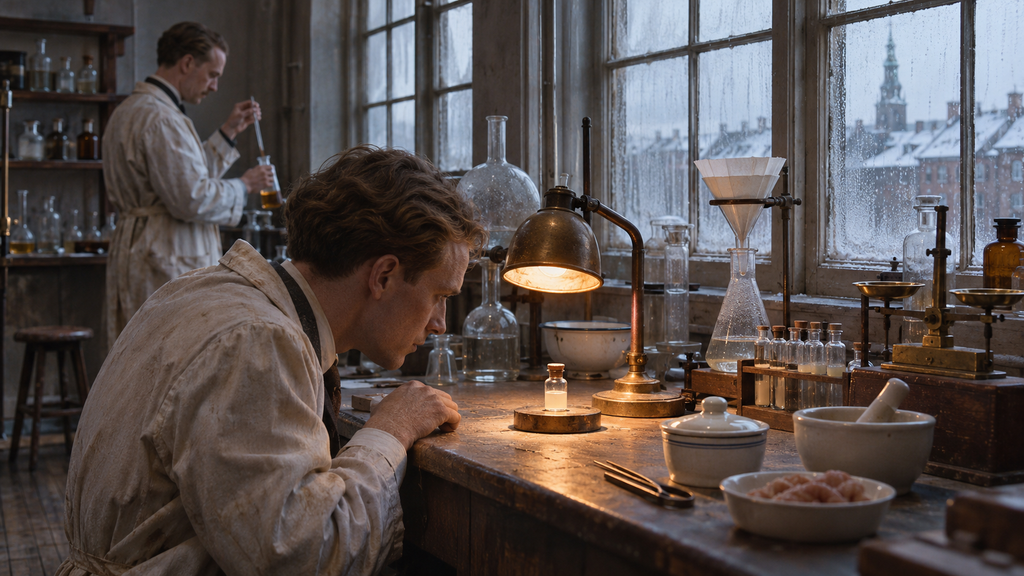
August began working with Hagedorn on experiments to prepare insulin using pancreatic tissue.
On December 21, 1922, the researchers succeeded in obtaining a small experimental quantity of insulin, according to historical accounts of the Danish program.
That was an experimental preparation, not yet the beginning of established commercial manufacture.
The work also required financial and manufacturing support.
August Kongsted, a pharmacist who controlled Løvens Kemiske Fabrik, the business associated with what became LEO Pharma, helped provide the facilities, resources and financing needed to advance the project.
Kongsted’s involvement was consequential. Scientific expertise alone could not produce a dependable medical supply.
According to historical research on the Danish insulin industry, the early commercial product was marketed under the name Insulin Leo.
On March 13, 1923, the first Danish patient was treated with insulin produced through the new initiative.
Nordisk Insulinlaboratorium emerged from this collaboration in 1923, with subsequent formal institutional arrangements developed during the following years.
The sequence is extraordinary even without embellishment.
A dinner conversation in America helped propel a journey to Toronto. Within weeks of the Kroghs’ return, Danish scientists had produced experimental insulin. Within months, a patient was receiving it.
The Toronto visit lasted three days. The Danish pharmaceutical industry that grew from it would last more than a century.
August Krogh’s Role in the 1923 Nobel Prize for Insulin
August Krogh’s Toronto visit also intersected with one of the most contested decisions in Nobel Prize history.
As a Nobel laureate, Krogh was eligible to nominate scientists for the Nobel Prize in Physiology or Medicine.
After visiting Toronto and examining the insulin research, he decided that Frederick Banting and John Macleod deserved recognition.
On January 20, 1923, Krogh wrote to the Swedish pharmacologist Göran Liljestrand, who served as secretary to the Nobel Committee, explaining his intention to nominate both men.
Krogh submitted that nomination, and Banting and Macleod were awarded the 1923 Nobel Prize in Physiology or Medicine for the discovery of insulin.
The award quickly became controversial.
Charles Best and James Collip had made important contributions to the Toronto work, but neither received a share of the Nobel Prize.
Banting objected strongly to Best’s exclusion, while debate about Macleod’s role and the proper allocation of credit continued among scientists and historians.
Krogh defended his decision.
His reasoning was that Banting had supplied an essential initiating idea, while Macleod’s facilities, supervision and scientific involvement were also indispensable to the discovery.
Whether that allocation fairly reflected everyone’s contribution remains a matter of historical discussion.
What the episode shows clearly is that Krogh’s involvement in the insulin story extended beyond securing manufacturing permission for Denmark.
He also helped shape the international recognition of the Toronto discovery.
Marie Krogh’s contribution belonged to a different part of the same history: recognizing what the discovery could mean for patients and helping initiate the journey that brought it to Scandinavia.
Scientific credit, clinical urgency and pharmaceutical development were already intertwined.
How Nordisk and Novo Became the Company Behind Ozempic
The Danish insulin enterprise did not remain united.
According to the Novo Nordisk Foundation’s institutional history, a disagreement in 1924 led to a split involving two brothers, Thorvald and Harald Pedersen.
Thorvald, a pharmacist and chemist working for Nordisk, was dismissed following a dispute with Hagedorn.
Harald, an engineer who had worked closely with August Krogh, resigned in support of his brother.
The brothers pursued insulin production independently and established the business that became Novo Terapeutisk Laboratorium in 1925.
From the same early insulin-manufacturing environment, Denmark now had two competing pharmaceutical companies.
Nordisk and Novo spent decades developing their manufacturing operations, research capabilities and international markets.
The rivalry helped define the country’s pharmaceutical industry for more than sixty years.
Their separate paths were also shaped by different relationships with scientific institutions, manufacturing expertise and foundation ownership.
The early Nordisk founders emphasized that profits from insulin should support scientific and humanitarian purposes, consistent with the principles of the arrangements negotiated with the University of Toronto.
Over time, both the Nordisk and Novo branches developed foundation structures.
In January 1989, the boards responsible for the two foundations announced an agreement to merge them.
That merger enabled the combination of the two pharmaceutical businesses into Novo Nordisk A/S.
The resulting Novo Nordisk Foundation remained central to the company’s ownership and governance.
Today, the Foundation controls Novo Nordisk through Novo Holdings.
According to Novo Nordisk’s published ownership information for the end of 2025, Novo Holdings controlled approximately 77.3% of the voting rights while holding approximately 28.1% of the company’s share capital.
That separation between share ownership and voting control is an important feature of the company’s governance model.
The Foundation’s role reflects an institutional lineage that reaches back to the decisions made around insulin manufacturing in the 1920s.
The pharmaceutical business has changed almost beyond recognition.
It now develops and sells medicines across multiple markets, including Ozempic and Wegovy, which contain semaglutide.
But the historical connection is direct: Nordisk’s early insulin work, the rival company Novo, and the 1989 merger all belong to the same corporate family tree.
Novo Nordisk did not begin as a weight-loss company. Its foundations were laid by physicians, scientists and manufacturers trying to make insulin available to people who needed it.
Why Marie Krogh’s Insulin Story Still Matters
There are several reasons this story deserves attention beyond its connection to a modern pharmaceutical brand.
The first is the role of patients in scientific progress.
Marie Krogh was not a passive recipient of the emerging insulin treatment. She was a physician and researcher whose own medical condition helped shape a concrete decision to investigate manufacturing opportunities.
Her contribution demonstrates that scientific expertise and personal experience can reinforce each other.
The second lesson concerns the distance between a discovery and a medicine that patients can actually receive.
Insulin had been developed in Toronto, but that did not automatically mean people in Denmark could obtain it.
Its introduction required permission to use the Canadian methods, technical knowledge, trained personnel, manufacturing resources, reliable quality control and a distribution system.
Those challenges remain familiar in modern biotechnology.
Developing a successful molecule is only part of the work. Producing it consistently, at sufficient scale and under appropriate quality standards can determine whether a medical breakthrough reaches patients.
The third lesson is institutional.
The early commitment to connecting pharmaceutical profits with research and humanitarian purposes helped establish an ownership structure that survived the development of a global corporation.
That structure remains relevant when assessing how Novo Nordisk responds to scientific competition, commercial pressures and the need for long-term investment.
Grey Pepper has explored some of those modern pressures in its profile of Novo Nordisk executive Mike Doustdar and its coverage of Novo Nordisk’s third-quarter 2026 performance and oral obesity-medicine strategy.
The contrast between the small-scale beginnings of insulin production and the commercial scale of modern obesity medicines is striking.
In 1922, the immediate challenge was establishing the ability to produce a newly discovered hormone in Denmark.
A century later, questions of manufacturing capacity, intellectual property, access, cost and scientific competition still define much of the pharmaceutical industry.
But the arrangements of 1922 should not be treated as legally or scientifically identical to present-day disputes over patented medicines, biosimilars or compounded treatments.
They demonstrate a continuing challenge in medicine, rather than establishing a direct equivalence between different regulatory systems and historical periods.
What the Historical Record Tells Us, and What It Does Not
The broad sequence of the Kroghs’ involvement is well established.
Marie learned more about the Toronto insulin work during the couple’s American journey, encouraged August to investigate it, and helped connect the Danish scientific community with developments in Canada.
The couple visited Toronto in November 1922, and August returned with permission to manufacture insulin in Scandinavia.
Experimental insulin was prepared in Copenhagen in December, and a Danish patient was treated in March 1923.
The institutional details require slightly more care.
Historical sources differ in how they date the establishment and formal organization of Nordisk Insulinlaboratorium and its associated foundation arrangements.
The Novo Nordisk Foundation describes the company as established in 1923, while other historical accounts distinguish the subsequent formal organization of the institution.
These differences do not change the sequence of the early insulin experiments, the first patient treatments or the later development of Nordisk and Novo.
There is also some uncertainty about the exact timing and medical classification of Marie’s diabetes diagnosis.
The Nobel biography describes 1921 as the probable year. That is a more appropriate formulation than presenting the date or modern diagnostic classification as completely settled.
The available sources do not document every word spoken at the private dinner with Joslin, so a dramatic scene of that conversation should be understood as a historical reconstruction rather than a transcript.
Nor does the historical record justify saying that Marie alone founded Novo Nordisk or that the Toronto insulin discovery directly produced Ozempic’s molecule.
Modern semaglutide is the result of a much later scientific development program involving different research teams, technologies and molecular engineering.
The connection is institutional, not a claim that the molecular science of semaglutide originated at the 1922 dinner.
One final detail gives the story its human dimension.
Marie herself eventually received insulin treatment. The Nobel historical biography says her children were unaware of her diabetes, and that she lived until 1943, when she died of breast cancer.
August continued his scientific career and largely withdrew from the commercial insulin enterprise.
The laboratory they helped bring into being continued through decades of expansion, competition and corporate restructuring.
Few global pharmaceutical companies can trace an important part of their origins to a single patient hearing about a medical breakthrough at dinner.
Novo Nordisk can.
And the patient was not merely waiting for the treatment to reach her. She helped set in motion the journey that brought it home.
Sources and Further Reading
- NobelPrize.org — Jan Lindsten, Schack August Steenberg Krogh: A Versatile Genius. Historical biography discussing Marie Krogh, the Toronto visit, Danish insulin production and the 1923 Nobel Prize.
- Novo Nordisk Foundation — History. Institutional account of August and Marie Krogh, Hans Christian Hagedorn, August Kongsted, the Pedersen brothers and the 1989 merger.
- Shared Histories Canada — Novo Nordisk. Historical account of the Kroghs’ Toronto visit, correspondence with Macleod and the early Danish insulin industry.
- Diabetes Research — The Nobel Prize of Physiology or Medicine, 1923: Controversies on the Discovery of the Antidiabetic Hormone. Historical scholarly analysis of the discovery of insulin and August Krogh’s Nobel nomination.
- Marie and August Krogh Prize — Prize History. Explains the 2009 renaming in recognition of Marie Krogh’s contribution.
- Novo Nordisk — Our Heritage. Official account of the company’s insulin origins, the founding of Nordisk and Novo, and the merger in 1989.
- Novo Nordisk — Corporate Governance. Ownership information covering the Novo Nordisk Foundation and Novo Holdings.